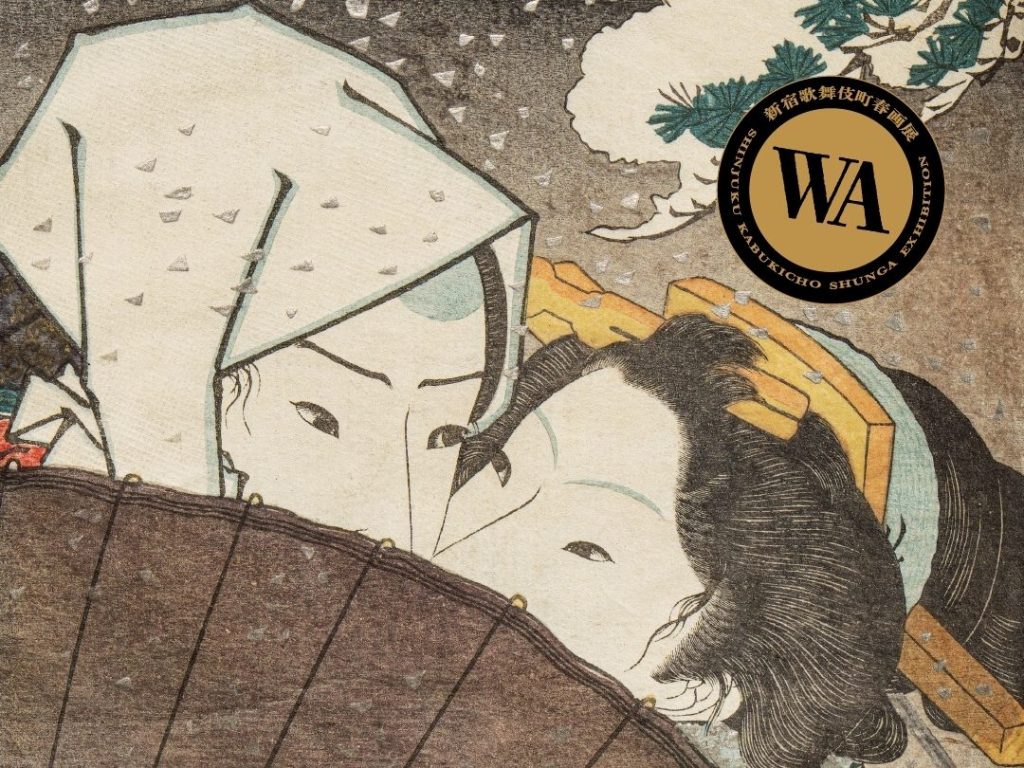
What happens when one of Japan’s greatest literary classics is reimagined as popular fiction, and then transformed into erotic art?
At the Shinjuku Kabukicho Shunga Exhibition “WA,” visitors can discover Utagawa Kunisada’s extraordinary “Three Genji” (San-Genji), a trilogy of Edo-period erotic books inspired by The Tale of Genji and its later adaptations.
All three works are presented together in an exhibition celebrating the artistic achievements of Kunisada and his fellow pupil Utagawa Kuniyoshi.
A Thousand-Year-Old Story, Reinvented

Written by Murasaki Shikibu in the early 11th century, The Tale of Genji is one of Japan’s most influential works of literature. Its stories of romance, jealousy, courtly life, and human relationships have inspired generations of artists and writers.
In 1829, writer Ryūtei Tanehiko and artist Utagawa Kunisada began publishing Nise Murasaki Inaka Genji (A Country Genji by a Fake Murasaki), a popular adaptation that moved the story from the Heian court to the Muromachi period.
Its handsome protagonist, Mitsuuji, became a sensation among Edo readers.
Kunisada subsequently developed this popular literary world into a remarkable trilogy of shunga.

Three Masterpieces of Erotic Woodblock Printing
The “Three Genji” consists of:
- Enshi Gojūyojō (c. 1835)
- Kachō Yojō Azuma Genji (c. 1837)
- Shōutsushi Aioi Genji (c. 1851)
The books are celebrated not only for their playful literary references but also for their exceptional craftsmanship.
Their pages feature karazuri (blind embossing), tsuyazuri (gloss printing), gold and silver printing, and kebori (hairline carving) so precise that several lines could be carved within a single millimeter.
These techniques reveal the extraordinary collaboration between artists, woodblock carvers, and printers.
Discover Genji Through Poetry
The exhibition also features a special audio guide by contemporary poet Machi Tawara.
Tawara introduces the literary connections between The Tale of Genji, Nise Murasaki Inaka Genji, and Kunisada’s trilogy, exploring the scenes and poems associated with the works.
The guide is available free of charge on visitors’ own devices.

Why See It in Kabukicho?
The exhibition is held at the Shinjuku Kabukicho Noh Stage and Host Club BOND, creating a distinctive encounter between classical Japanese literature, Edo-period erotic art, traditional performance culture, and contemporary Tokyo nightlife.
From the world of Murasaki Shikibu to the imagination of Kunisada, Genji has never stopped changing.
Discover its unexpected transformations in Kabukicho.
Utagawa Kunisada & Utagawa Kuniyoshi — Shinjuku Kabukicho Shunga Exhibition “WA”
October 3 – November 29, 2026 | Ages 18+

Take a Piece of Kabukicho Home — And Explore Beyond the Exhibition
Your Kabukicho experience doesn’t have to end at the Shunga Exhibition “WA.”
Visit the Kabukicho Information Center (KIC) in BOND Souvenir Shop, a cultural souvenir shop operated by Smappa!Group in a former host club space. Discover original Kabukicho-themed merchandise, unique souvenirs, and another perspective on the neighborhood’s distinctive culture.
Want to go a step further? Join a Kabukicho Host Club Experience and discover one of Japan’s most distinctive forms of nightlife hospitality. With guided support available in English and Chinese, visitors can learn about host club etiquette, enjoy conversation, and experience a side of Kabukicho rarely encountered through ordinary sightseeing.
From Edo-period art to contemporary entertainment, discover the many layers of Kabukicho.

Explore the Kabukicho Information Center: https://kic.tokyo/collections/all
Discover the Kabukicho Host Club Experience: Guided experiences available by reservation.