
Did you know that some of Japan’s most inventive Edo-period erotic artworks were inspired by Chinese literature?
At the Shinjuku Kabukicho Shunga Exhibition “WA,” the works of Utagawa Kuniyoshi reveal how Chinese stories, legendary heroes, and landscape traditions were reimagined by Japanese artists.
From Water Margin to The Plum in the Golden Vase, Kuniyoshi transformed familiar literary worlds into bold, humorous, and sometimes provocative visual art.
The Chinese Heroes Who Made Kuniyoshi Famous

Water Margin (Shuihu Zhuan, known in Japan as Suikoden) is a Chinese classical novel about 108 heroes who gather at Liangshan Marsh.
The story became enormously popular in Edo-period Japan.
Kuniyoshi achieved fame through his series One Hundred and Eight Heroes of the Popular Suikoden, depicting powerful warriors with dramatic movements, muscular bodies, and elaborate tattoos.
His interpretation helped shape the visual culture of Japanese warrior prints and influenced the popularity of decorative tattooing.
When Water Margin Became Erotic Art

Kuniyoshi later reimagined the story in his erotic book Tōsei Suikoden (A Contemporary Suikoden).
In the original novel, 108 demonic stars are released into the heavens. In Kuniyoshi’s version, an official opens a mound where human lust has been sealed, releasing 108 lustful men and women.
The heroic story becomes an imaginative erotic parody.
Another work, Chinpen Shinkei Bai (Deep Chamber Plum by the Pillowside), was inspired by Kyokutei Bakin’s Shinpen Kinpeibai, itself adapted from the Chinese novel Jin Ping Mei (The Plum in the Golden Vase).
These works demonstrate how Chinese literature traveled to Japan and continued to evolve through new forms of storytelling.
Chinese Landscapes, Japanese Erotic Prints
The influence of Chinese culture also appears in Kuniyoshi’s Ōmi Hakkei (Eight Pledges at Lovers’ Meetings).
The series plays on Japan’s Eight Views of Ōmi, which were themselves inspired by China’s Eight Views of Xiaoxiang.
Each print combines a small landscape with an erotic scene, using visual metaphors and playful references to connect nature, poetry, and human desire.
A landscape tradition that began in China was transformed into Japanese scenery, then reinterpreted once again through shunga.
Discover the Cultural Connections in Kabukicho

The Shinjuku Kabukicho Shunga Exhibition “WA” presents Kuniyoshi alongside his senior fellow pupil Utagawa Kunisada, exploring their different approaches to erotic art.
Organized by Smappa!Group, the exhibition is held at the Shinjuku Kabukicho Noh Stage and Host Club BOND.
For visitors interested in Chinese literature, Japanese art, or the history of cultural exchange across East Asia, the exhibition offers a surprising new perspective on familiar stories.
Dates: October 3 – November 29, 2026
Admission: Ages 18 and over
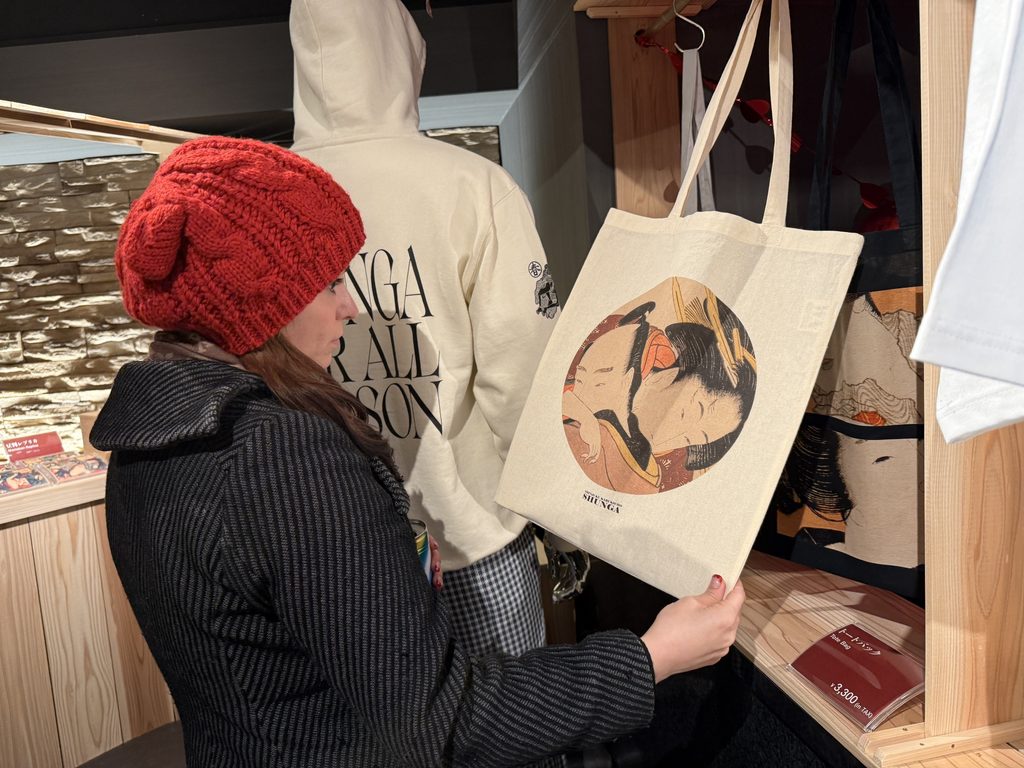
Take a Piece of Kabukicho Home — And Explore Beyond the Exhibition
Your Kabukicho experience doesn’t have to end at the Shunga Exhibition “WA.”
Visit the Kabukicho Information Center (KIC) in BOND Souvenir Shop, a cultural souvenir shop operated by Smappa!Group in a former host club space. Discover original Kabukicho-themed merchandise, unique souvenirs, and another perspective on the neighborhood’s distinctive culture.
Want to go a step further? Join a Kabukicho Host Club Experience and discover one of Japan’s most distinctive forms of nightlife hospitality. With guided support available in English and Chinese, visitors can learn about host club etiquette, enjoy conversation, and experience a side of Kabukicho rarely encountered through ordinary sightseeing.
From Edo-period art to contemporary entertainment, discover the many layers of Kabukicho.
Explore the Kabukicho Information Center: https://kic.tokyo/collections/all
Discover the Kabukicho Host Club Experience: Guided experiences available by reservation.