Tiny wooden buildings, narrow alleyways, hundreds of bars, and decades of stories hidden behind their doors.
ゴールデン街-1024x683.jpg)
- From Postwar Black Market to Golden Gai
- Golden Gai and Modern Kabukicho
- Four Golden Gai Bars to Discover
- Golden Gai Etiquette for First-Time Visitors
- More Than Golden Gai: I ♥ Kabukicho
- Visit the Kabukicho Information Center
Shinjuku Golden Gai is now one of Tokyo’s most famous nightlife destinations, but there is much more to the neighborhood than bar hopping.
Its streets preserve traces of postwar Tokyo, underground culture, writers and artists, nightlife workers, and the people who fought to keep this small corner of Shinjuku alive while the city around it was rebuilt.
If you want to experience the deeper side of Tokyo nightlife, Golden Gai is a good place to start.

From Postwar Black Market to Golden Gai
The story of Golden Gai begins in the chaotic years immediately after World War II.
Black markets appeared around Shinjuku Station, selling food and goods at a time when everyday necessities were difficult to obtain. As postwar reconstruction progressed, markets and street stalls around the station were cleared and relocated.
Some were moved to what is now Kabukicho 1-chome, creating the foundations of present-day Golden Gai.
The area later became associated with the postwar red-light district before developing into the dense collection of drinking establishments we know today.
Walk through Golden Gai now and this history is still visible in its scale: tiny buildings, extremely narrow streets, steep staircases, and bars that may seat only a handful of people.
While much of Shinjuku was demolished and rebuilt during Tokyo’s rapid modernization, Golden Gai survived.
A Meeting Place for Tokyo’s Underground Culture
By the 1960s and 1970s, Golden Gai had developed another identity.
Writers, filmmakers, actors, artists, journalists, and other cultural figures began gathering in its tiny bars.
Figures associated with Japan’s postwar counterculture, theater, cinema, manga, and literature became part of the mythology surrounding the neighborhood.
That legacy is important to understanding Golden Gai today.
Each bar is more than somewhere to order a drink. Many have their own identity, community, music, collections, and regular customers.
Opening a door can feel like entering somebody’s private world.
Why Did Golden Gai Survive?
Golden Gai’s survival was never guaranteed.
During Japan’s economic bubble in the 1980s, redevelopment pressure reached the neighborhood. Property acquisition became increasingly aggressive, and local bar owners organized to oppose redevelopment and protect the district.
The result is something increasingly rare in central Tokyo: a neighborhood whose physical scale still reflects an earlier period of the city’s history.
Today, Golden Gai sits beside the neon towers and giant screens of modern Shinjuku.
That contrast is part of what makes it extraordinary.
Smappa_AmazeShinjuku001-3.jpg-のコピー-1024x683.jpeg)
Golden Gai and Modern Kabukicho
Golden Gai should also be understood as part of the larger ecosystem of Kabukicho nightlife.
Kabukicho is home to bars, restaurants, clubs, host clubs, hotels, entertainment venues, and thousands of people working at night.
The city changes character as the evening gets later.
People finishing work become customers themselves. Bartenders, hosts, hospitality workers, performers, restaurant staff, and regulars move between establishments, creating a nighttime economy that operates differently from daytime Tokyo.
Golden Gai is one of the places where these worlds overlap.
To understand Kabukicho, it is worth seeing not only its famous signs and entertainment venues, but also the smaller spaces where people actually meet, drink, talk, and build relationships.
Four Golden Gai Bars to Discover
For first-time visitors, choosing among Golden Gai’s many tiny doors can be intimidating.
Here are four places to begin.
MISO SOUP
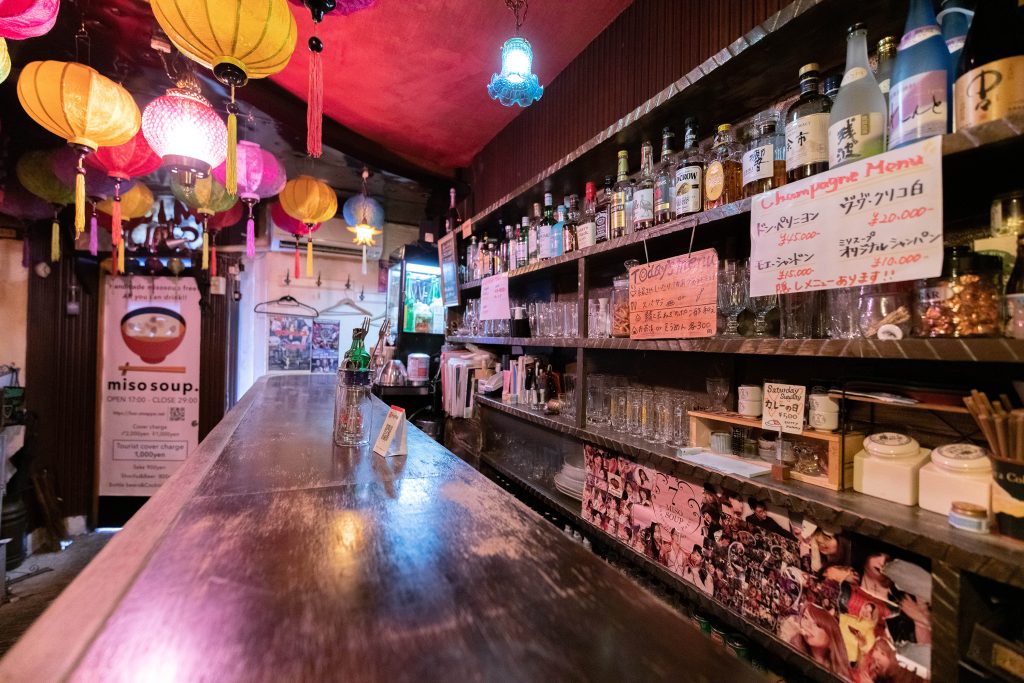
A warm, nostalgic bar built around one of Japan’s most comforting everyday foods: miso soup.
Daily miso soups are served alongside small pickles and appetizers prepared by the staff, with a carefully selected range of sake, whisky, and other drinks.
The large miso soup poster outside makes it easy to find.
Open: Mon–Sat 6PM–5AM / Sun 4PM–12AM
Address: 1-1-9 Kabukicho, Shinjuku City, Tokyo 160-0021
Instagram: @misosoup.g
red.
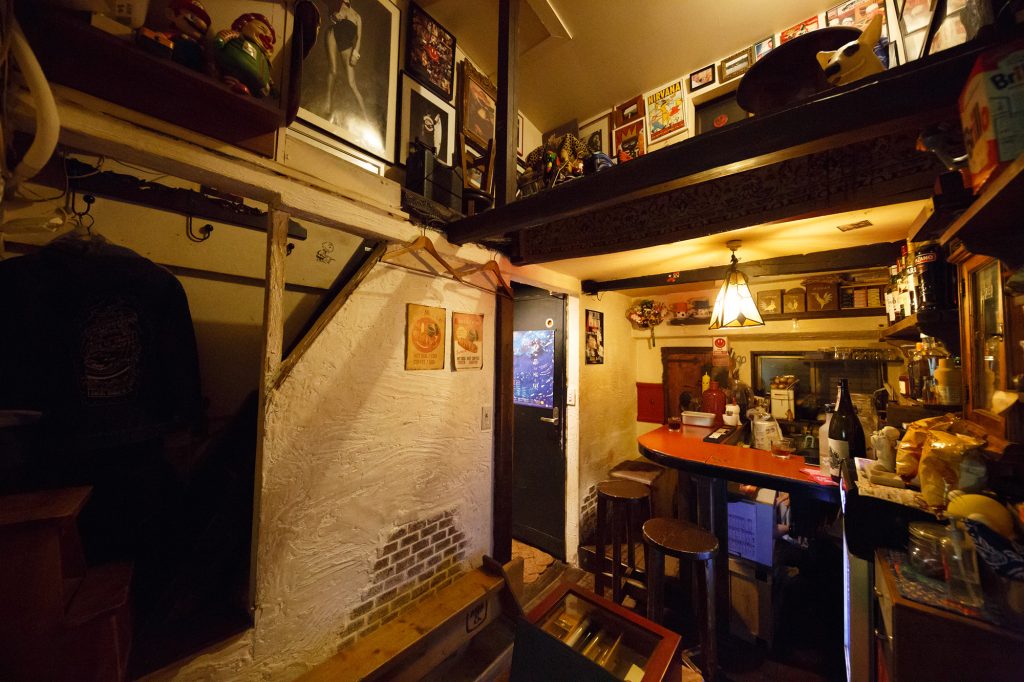
Climb a narrow staircase to discover this intimate second-floor bar.
One of its signatures is cold-brew coffee, which can be enjoyed on its own or mixed with Japanese shochu. Counter seating, tables, and a small loft make it a comfortable stop for both solo visitors and small groups.
Open: Mon–Wed 6PM–5AM / Thu–Sun 3PM–5AM
Address: 2F, Hanazono 5th Street, 1-1-6 Kabukicho, Shinjuku City, Tokyo
Instagram: @red.5bangai_goldengai
BRIAN BAR
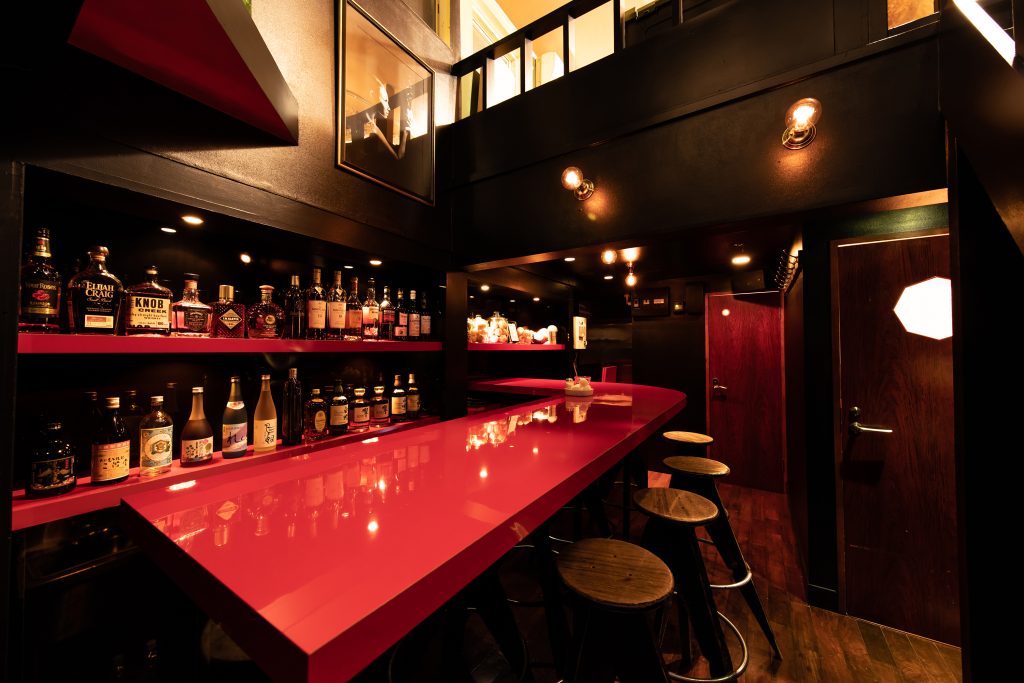
A sophisticated Golden Gai bar centered around an eye-catching red-and-black counter.
The shelves carry a wide selection of spirits, while the bartender’s signature lemon sour is a good place to start. Upstairs, a small loft with sofa seating offers another place to settle in.
Open: Daily 6PM–5AM
Address: 2F, Golden Gai G2 Street, 1-1-9 Kabukicho, Shinjuku City, Tokyo
Instagram: @brianbar666
ZEAMI
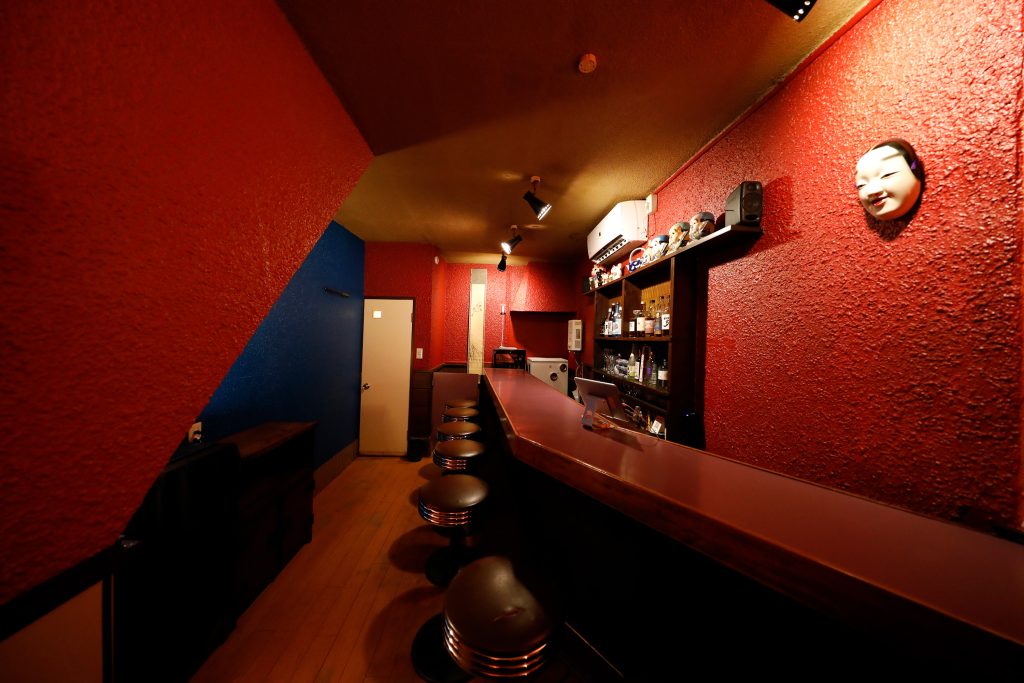
Inspired by Noh, one of Japan’s classical performing arts, ZEAMI brings together traditional Japanese references and the casual intimacy of Golden Gai.
Its selection includes Japanese whisky, sake, seasonal fruit liqueurs, and habu sake. Multilingual staff make it an approachable starting point for international visitors exploring Golden Gai for the first time.
Open: Daily 6PM–5AM
Address: 1-1-10 Kabukicho, Shinjuku City, Tokyo
Instagram: @zeami_goldengai
Golden Gai Etiquette for First-Time Visitors
Golden Gai is famous internationally, but it is not a theme park. These are real neighborhood bars, many of them extremely small.
Some establishments welcome first-time international visitors, while others primarily serve regular customers. Cover charges may apply, and photography rules vary from bar to bar.
A few simple rules make the experience much better:
- Check whether there is a cover charge before ordering.
- Do not photograph people or interiors without permission.
- Avoid blocking the narrow streets and entrances.
- Do not bring drinks from one establishment into another.
- Respect bars that are members-only or full.
- Remember that a tiny bar may have only six or eight seats.
The best Golden Gai experience is often not about visiting as many bars as possible. Stay somewhere you like, talk to the bartender, and allow the night to unfold naturally.
Go Deeper: Explore Kabukicho with a Local Guide
Golden Gai becomes much more interesting when you understand what surrounds it.
The postwar history of Shinjuku, Kabukicho’s transformation into an entertainment district, its host club culture, small bars, restaurants, nightlife workers, and surviving pockets of old Tokyo are all connected.
Kabukicho Concierge offers guided nightlife experiences with English- and Chinese-speaking guides.
Rather than simply showing you where to drink, the experience introduces the culture and stories behind the neighborhood while helping with communication, ordering, and navigating venues that can otherwise be difficult for international visitors to enter.
Kabukicho Food & Bar Hopping Tour
For visitors who want to combine nightlife with Japanese food, the Kabukicho Food & Bar Hopping Tour explores several sides of the neighborhood in one evening.
Kabukicho Food & Bar Hopping Tour — ¥30,000 per person
A 2.5-hour food and nightlife experience combining Japanese cuisine, local restaurants, Kabukicho, and Shinjuku Golden Gai. Enjoy sushi or bistro-style dining, izakaya dishes, and a guided walk through Golden Gai with interpretation and on-site support.
Kabukicho & Golden Gai Night Tour — ¥18,000 per person
A 90-minute introduction to Kabukicho and Golden Gai for first-time visitors. Visit one bar in Kabukicho and one bar in Golden Gai while learning how local bars work, including ordering, cover charges, otoshi, and nightlife etiquette. One drink at each venue is included.
It is designed especially for first-time visitors who want to explore Kabukicho beyond the tourist surface without worrying about language barriers or how to enter unfamiliar venues.
Smappa_AmazeShinjuku001-1.jpg-のコピー-1024x683.jpeg)
More Than Golden Gai: I ♥ Kabukicho
Golden Gai is only one part of the Kabukicho experience. Step back into the main entertainment district and you will immediately see the contrast between its narrow postwar alleyways and the larger-than-life landscape of modern Tokyo.
Meet Godzilla Head at Shinjuku Toho Building
Look up and you will find one of Kabukicho’s most recognizable landmarks: the enormous Godzilla Head emerging from the Shinjuku Toho Building.
Opened in 2015 on the former site of the Shinjuku Koma Theater, the building became a new symbol of Kabukicho, with Godzilla watching over the neighborhood from above.
The contrast is particularly striking after exploring Golden Gai. Within just a few minutes, you can walk from tiny postwar-style alleyways and intimate bars into a world of giant screens, entertainment complexes, crowds, and Godzilla.
This contrast between old and new is part of what makes Kabukicho so fascinating. It remains visible in the strange gaps between buildings, tiny bars beside high-rises, old alleyways behind digital billboards, and businesses that continue to reinvent the neighborhood every night.
Visit the Kabukicho Information Center
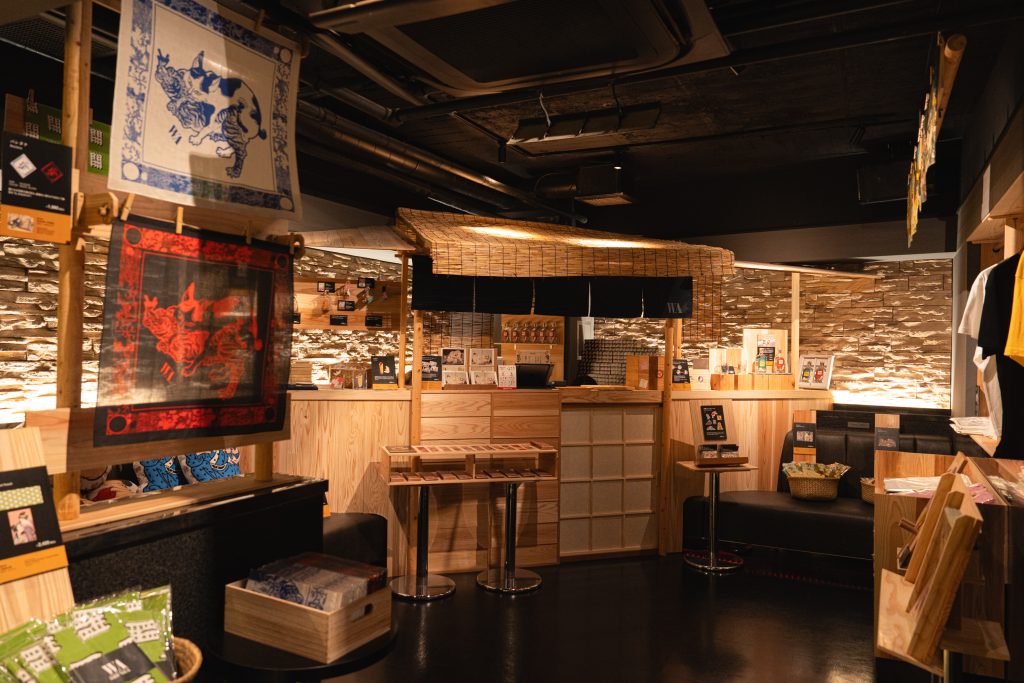
Before beginning your night, stop by the Kabukicho Information Center, a cultural space operated by Smappa! Group.
Set inside an authentic host club interior, the space introduces another side of contemporary Kabukicho. Visitors can enjoy drinks, browse original Kabukicho-themed merchandise, and learn more about the neighborhood’s culture.
Golden Gai may be one of the best-known entrances into Tokyo nightlife.
But once you understand the history behind those tiny streets, it becomes something more:
a surviving fragment of postwar Tokyo, still alive after dark.