From Tokyo’s Kabukicho nightlife district to a major exhibition in Paris, Japanese shunga is attracting renewed international attention. Why is this once-marginalized art form being rediscovered today?

Japanese erotic art is having a moment.
In autumn 2026, two exhibitions in Tokyo and Paris are bringing shunga, the erotic paintings and woodblock prints of historical Japan, into the contemporary cultural spotlight.
In Tokyo, the Utagawa Kunisada & Utagawa Kuniyoshi — Shinjuku Kabukicho Shunga Exhibition “WA” runs from October 3 to November 29, presenting rare works by two legendary ukiyo-e artists in the unexpected setting of a traditional Noh stage and a former host club.
Meanwhile, the Maison de la culture du Japon à Paris opens Shunga: Masterpieces of Erotic Art from the Edo Period on November 12, 2026, running through February 13, 2027. Featuring works by celebrated artists including Kitagawa Utamaro and Katsushika Hokusai, the exhibition introduces French audiences to a genre that has long occupied a complicated position in Japanese art history.
These exhibitions are independent projects, but their timing reveals a shared cultural development: shunga is increasingly being approached not simply as erotic imagery, but as an important part of Japanese artistic and social history.
What Is Shunga? More Than Japanese Erotic Art

The word shunga (春画) literally means “spring pictures,” with spring serving as a traditional euphemism for sexuality.
Shunga flourished during Japan’s Edo period (1603–1868), when the development of commercial publishing and woodblock printing made illustrated books and prints available to a growing urban audience.
Although explicit sexual imagery is central to the genre, shunga also encompasses humor, romance, fashion, literary parody, and observations of everyday life.
It was sometimes called warai-e, or “laughing pictures,” reflecting its playful character and the social enjoyment surrounding these works.
Many of Japan’s most celebrated ukiyo-e artists—including Utamaro, Hokusai, Kunisada, and Kuniyoshi—created erotic artworks alongside their landscapes, portraits, and illustrated books.
Their shunga employed the same sophisticated artistic techniques found throughout ukiyo-e, from intricate carving and multicolored printing to elaborate textile patterns and expressive compositions.
Understanding shunga therefore means looking beyond its subject matter to appreciate its place within the broader history of Japanese visual culture.

Paris 2026: Shunga Enters the International Museum Spotlight
From November 12, 2026, the Maison de la culture du Japon à Paris presents Shunga: Masterpieces of Erotic Art from the Edo Period (1603–1868).
The exhibition traces the development of Japanese erotic art through paintings, illustrated books, and woodblock prints, highlighting the genre’s artistic sophistication and its changing reception over time.
The exhibition also explores the relationship between shunga and censorship, the evolution of Japanese printing techniques, and the ways erotic imagery reflected the lives and imaginations of Edo-period audiences.
By placing these works within a historical and artistic framework, the Paris exhibition contributes to the international reassessment of shunga as Japanese cultural heritage.
It follows an earlier landmark in this process: the British Museum’s 2013–2014 exhibition Shunga: Sex and Pleasure in Japanese Art, which helped introduce the subject to a wider international museum audience.
The Paris exhibition also includes related film screenings, lectures, guided tours, and a woodblock-printing workshop, extending the discussion beyond the exhibition galleries.
Tokyo 2026: Shunga Meets Contemporary Kabukicho Culture
The Paris exhibition explores the rich history and artistry of shunga. In Tokyo, the Shinjuku Kabukicho Shunga Exhibition “WA” celebrates this artistic heritage in a setting that encourages conversation, shared laughter, and discovery.
The Shinjuku Kabukicho Shunga Exhibition “WA” brings historical Japanese art into the heart of one of Tokyo’s best-known entertainment districts.
Organized by Smappa!Group and Wine Rice Co., Ltd., the exhibition features approximately 100 works by Utagawa Kunisada and Utagawa Kuniyoshi from the Uragami Sōkyūdō collection.
Kunisada is celebrated for his kabuki actor portraits, beautiful women, and illustrations inspired by The Tale of Genji. Kuniyoshi is renowned for his dynamic warrior prints, imaginative compositions, and playful visual storytelling.
A major highlight is Kunisada’s celebrated Three Genji trilogy, known for its extraordinary woodblock-printing craftsmanship and elaborate literary references.
The exhibition takes place across two unusual venues: the historic Shinjuku Kabukicho Noh Stage, established in 1941, and Host Club BOND, temporarily transformed into an exhibition space.
Rather than separating historical art from contemporary urban life, the exhibition places them in dialogue.
From “Laughing Pictures” to Shared Cultural Experiences
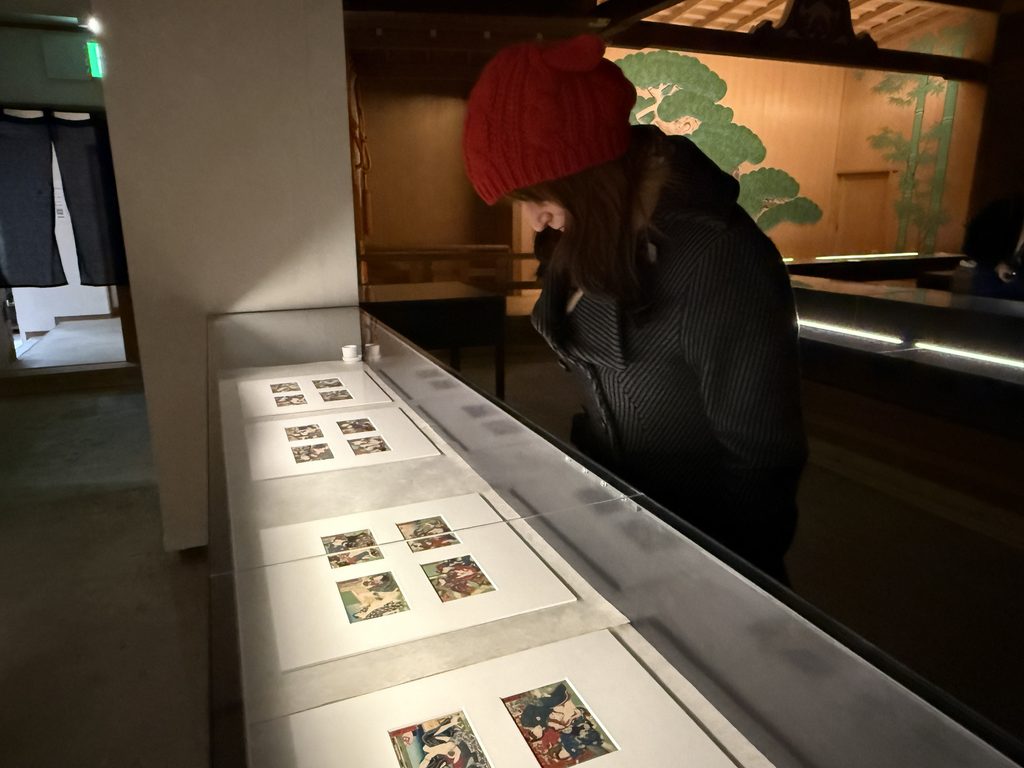
One of the most distinctive aspects of the Tokyo exhibition is its emphasis on the social experience of art.
Inspired by the historical enjoyment of warai-e, the exhibition features circular display arrangements that allow visitors to observe both the artworks and one another’s reactions.
Free audio guides, accessible explanations, and opportunities to explore reproductions of historical illustrated books encourage visitors to engage with shunga beyond conventional museum viewing.
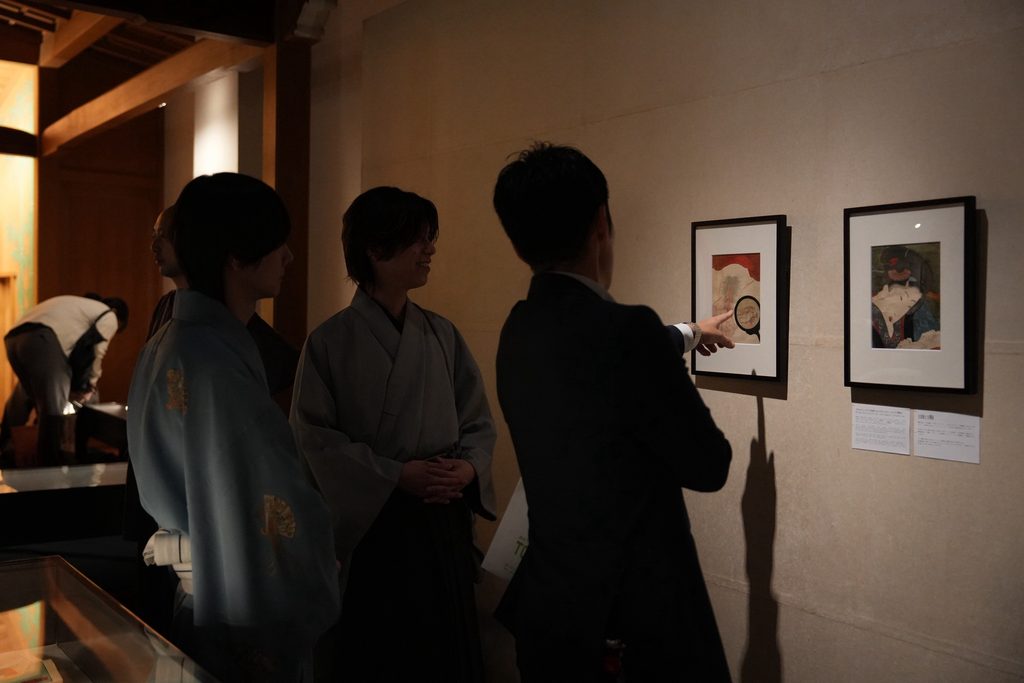
The exhibition also offers the Shunga Tour with Hosts, a two-hour experience combining a guided visit with working hosts from Kabukicho and an introduction to Japanese host club hospitality.
This unusual program was recently featured by Japanese culture publication niew, whose reporter described the experience as unexpectedly humorous, welcoming, and uplifting.
In this setting, shunga becomes more than an object of historical study. It becomes a starting point for conversation, laughter, and human connection.
Read the Full niew Feature:
What Happens When Tokyo Hosts Take You on a Tour of Shunga, Japan’s Erotic Art?
Written by Rikimaru Yamatsuka
Edited by Yui Isaji
Published by niew | Sponsored feature (#PR)
Japanese edition: November 4, 2026
English edition: November 5, 2026
Read the full article and view the original photographs on niew
Why Is Shunga Being Rediscovered Now?
The renewed interest in shunga reflects several overlapping developments.
First, museums and researchers have increasingly recognized the artistic quality of erotic woodblock prints and their importance to Japanese publishing history.
Second, contemporary audiences are exploring historical representations of sexuality, intimacy, humor, and social relationships through new cultural perspectives.
Third, exhibitions are finding different ways to present traditional art, from scholarly museum surveys to participatory experiences that connect historical works with contemporary culture.
The simultaneous exhibitions in Tokyo and Paris illustrate these approaches.
Paris emphasizes historical development and artistic recognition. Kabukicho explores how the social and humorous dimensions of shunga can inspire new ways of experiencing art today.
Together, they suggest that shunga’s contemporary relevance lies not only in its provocative imagery, but also in its craftsmanship, creativity, and understanding of human relationships.
Two Cities, Two Perspectives on Japanese Shunga
For anyone interested in Japanese art, ukiyo-e, Edo-period culture, or the history of erotic imagery, autumn 2026 offers an unusual opportunity to encounter shunga from different perspectives.
In Paris, visitors can explore the genre’s historical evolution through a major cultural exhibition.
In Tokyo, they can discover masterpieces by Kunisada and Kuniyoshi while experiencing a contemporary interpretation of shunga’s playful and communal traditions.
Is shunga experiencing a global revival?
It may be too early to call it a worldwide boom. But the growing visibility of shunga in international exhibitions points to a meaningful change in how this once-marginalized art form is understood and appreciated.
What was once frequently dismissed as obscene is increasingly being recognized as a sophisticated expression of Japanese art, humor, literature, and everyday life.
And in 2026, Tokyo and Paris are offering two compelling reasons to look again.
Shunga Exhibitions in 2026–2027
Tokyo, Japan
Utagawa Kunisada & Utagawa Kuniyoshi — Shinjuku Kabukicho Shunga Exhibition “WA”
Dates: October 3 – November 29, 2026
Hours: 11:00 AM – 9:00 PM (last admission 8:30 PM)
Venues: Shinjuku Kabukicho Noh Stage / Host Club BOND
Admission: Ages 18+
Official Exhibition Website
Paris, France
Shunga: Masterpieces of Erotic Art from the Edo Period (1603–1868)
Dates: November 12, 2026 – February 13, 2027
First presentation: November 12 – December 19, 2026
Second presentation: January 5 – February 13, 2027
Venue: Maison de la culture du Japon à Paris
Admission: Ages 18+
Paris Exhibition Information
Continue Exploring Kabukicho
Discover the Chinese literary and artistic influences behind Japanese shunga, then explore another distinctive aspect of contemporary Japanese culture through a guided Kabukicho Host Club Experience.
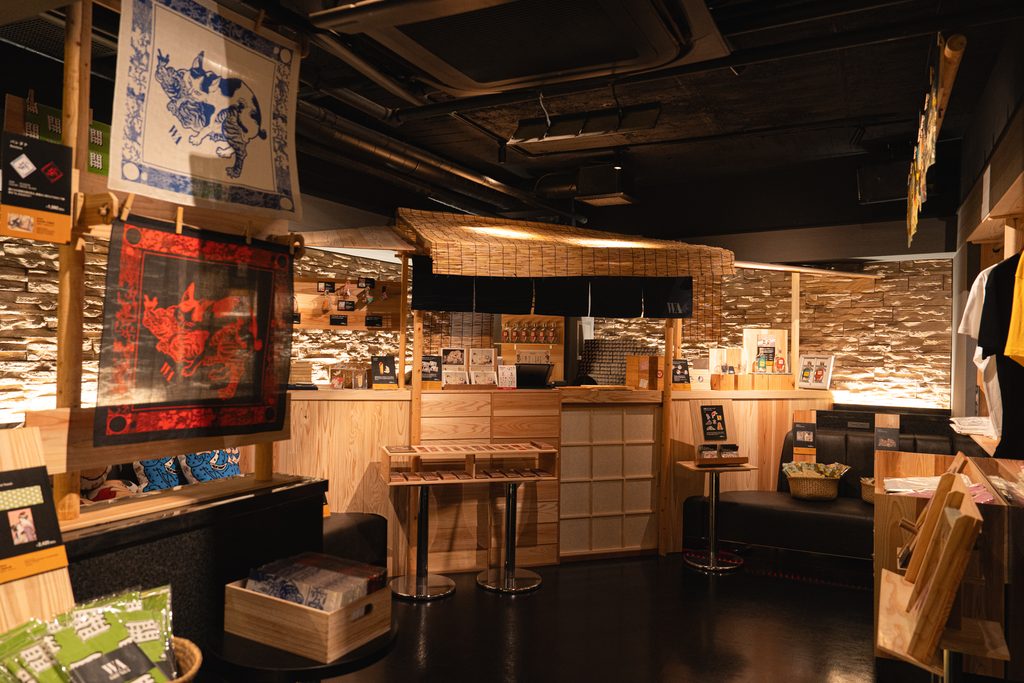
Take a Piece of Kabukicho Home — And Explore Beyond the Exhibition
Your Kabukicho experience doesn’t have to end at the Shunga Exhibition “WA.”
Visit the Kabukicho Information Center (KIC) in BOND Souvenir Shop, a cultural souvenir shop operated by Smappa!Group in a former host club space. Discover original Kabukicho-themed merchandise, unique souvenirs, and another perspective on the neighborhood’s distinctive culture.
Want to go a step further? Join a Kabukicho Host Club Experience and discover one of Japan’s most distinctive forms of nightlife hospitality. With guided support available in English and Chinese, visitors can learn about host club etiquette, enjoy conversation, and experience a side of Kabukicho rarely encountered through ordinary sightseeing.
From Edo-period art to contemporary entertainment, discover the many layers of Kabukicho.

Explore the Kabukicho Information Center: https://kic.tokyo/collections/all
Discover the Kabukicho Host Club Experience: Guided experiences are available by reservation.