Bar Host club Hostess club Miso Shunga Ukiyo-e 东京男公关俱乐部 中国語
/浦上蒼穹堂蔵.webp)
- Introduction: Defining the World of Shunga
- The Historical Timeline: From 1603 to the Meiji Era
- Iconic Artists and Their Masterpieces
- Visual Characteristics and Artistic Themes
- Social Context: Consumption and Culture in the Edo City
- Global Recognition: From London to the World
- How to Experience Shunga Today: Museums and Privacy
- Conclusion and Privacy: The Lasting Legacy of Japan's Erotic Art
- Final thought
- FAQ
Introduction: Defining the World of Shunga
The term Shunga is a Japanese euphemism that literally means “spring pictures,” with “spring” symbolizing life, nature, and human intimacy. It developed as a genre of Ukiyo-e, the traditional Japanese woodblock prints, focusing on intimate scenes rather than landscapes or actors.
However, Shunga was not simply erotic art. It served as an introduction to sexual nature and pleasure within Edo-period culture, where such themes were openly accepted. Unlike modern erotica, which often focuses on stimulation, Shunga was deeply connected to storytelling, artistry, and cultural values, offering a more holistic view of human desire.
/浦上蒼穹堂蔵.webp)
The Historical Timeline: From 1603 to the Meiji Era
Shunga began its early production during the Edo period, starting in 1603, when urban culture and art rapidly developed. Influenced by Chinese erotic illustrations, it evolved into a uniquely Japanese form with distinct aesthetics and traditions, becoming widely popular across society over the following century.
However, this changed in the Meiji era, as Western influence introduced modern values and stricter censorship. As a result, Shunga declined significantly, shifting from a common cultural form to a restricted and marginalized art.
Iconic Artists and Their Masterpieces
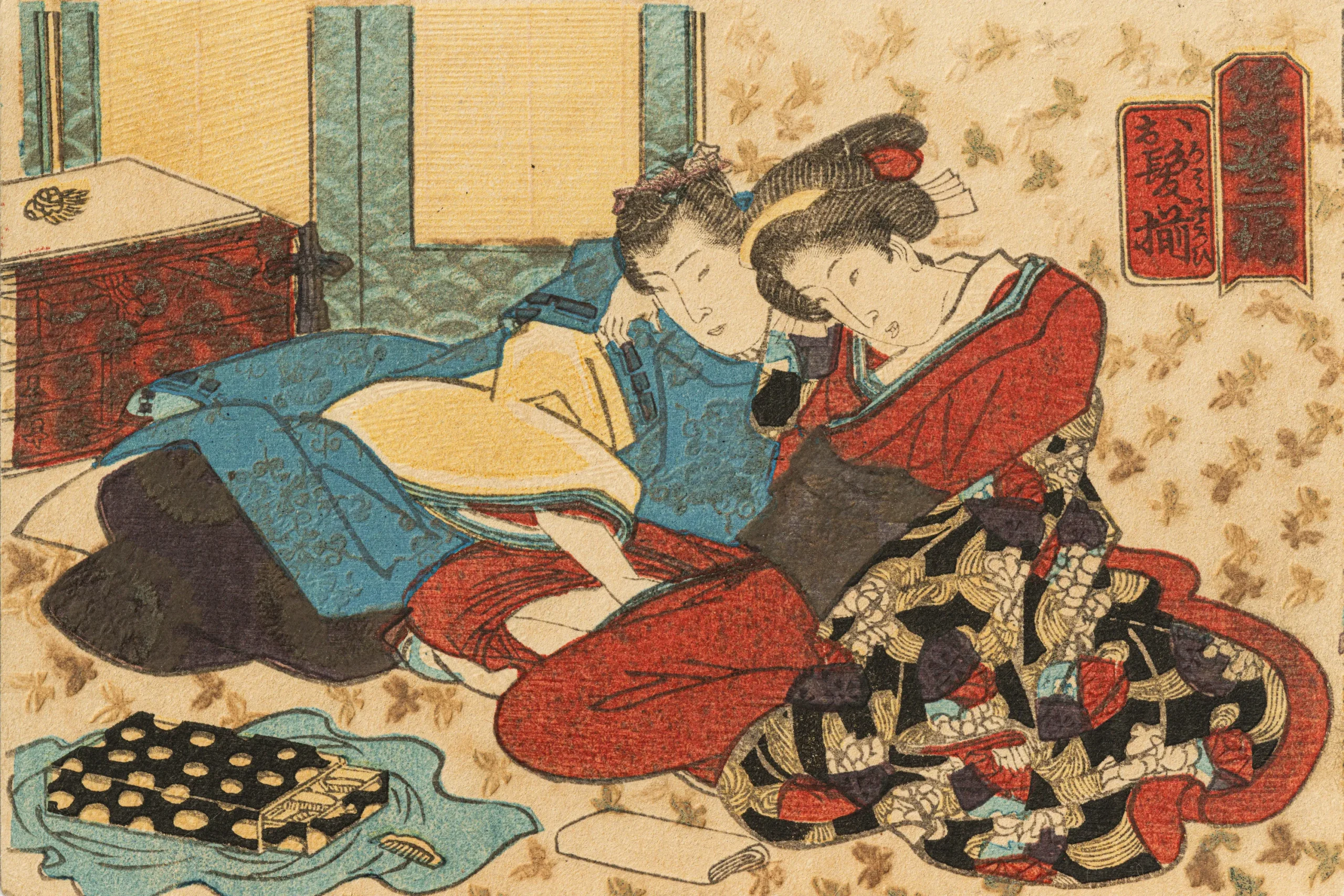
Among the most influential Shunga artists, Hokusai stands out for his bold and imaginative works, especially The Dream of the Fisherman’s Wife, which remains one of the most famous images in the genre. In contrast, Utamaro focused on the elegant and visual portrayal of intimacy, capturing subtle expressions of female beauty and emotion.
Other notable artists include Keisai Eisen, Utagawa Kunisada, and Suzuki Harunobu, each contributing unique styles and series to Shunga. Through advanced woodblock techniques, rich colors, and high-quality material, these artists elevated Shunga into a refined and respected art form.
Visual Characteristics and Artistic Themes
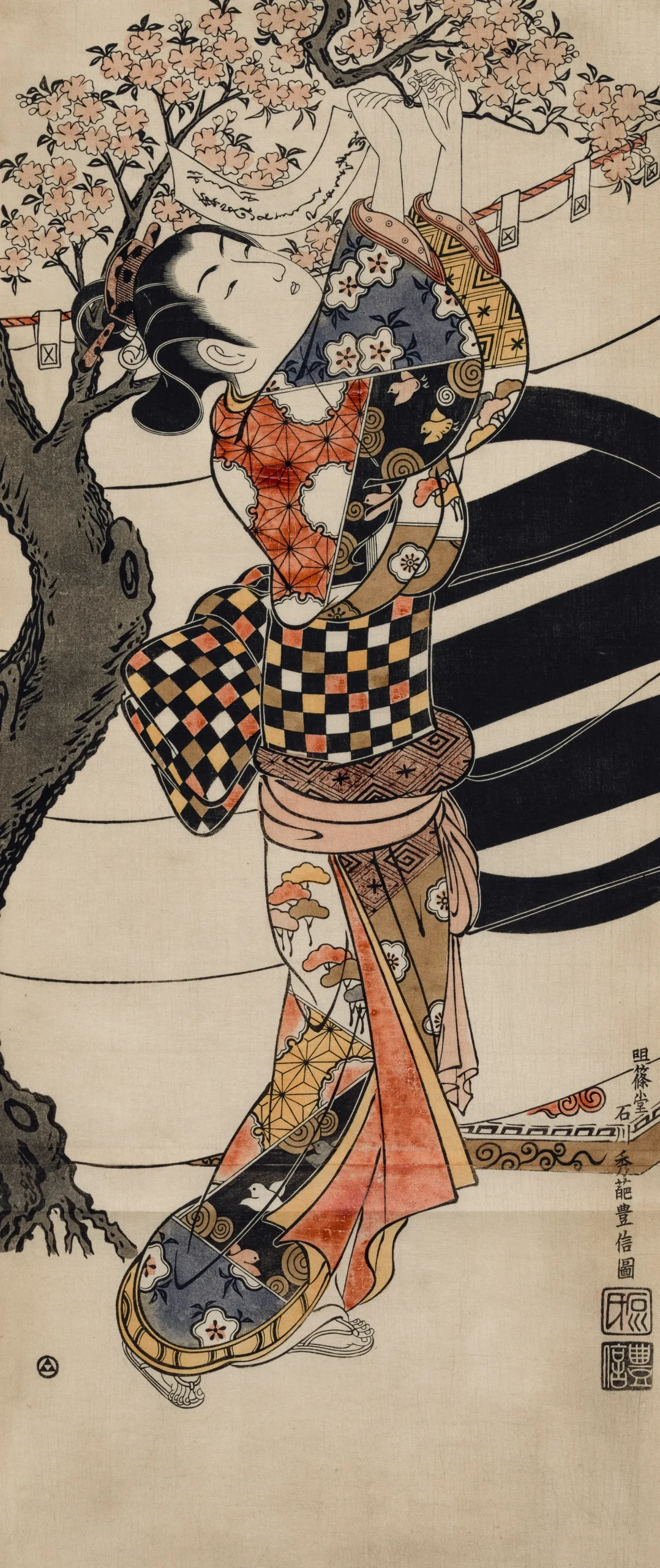
One of the most distinctive features of Shunga is its explicit yet stylized depiction of intimacy. While genitals and intercourse are clearly illustrated in many scenes, the focus is not purely physical. One notable characteristic is the exaggerated scale of the genitals, used to emphasize both visual impact and emotional intensity.
Great attention is given to clothing, luxurious fabrics, and intricate patterns, which often dominate the composition. Thematically, Shunga explores love, desire, and humour (warai-e), while depicting diverse relations, including male and female couples as well as same-sex interactions.

Social Context: Consumption and Culture in the Edo City
Shunga was widely popular across Edo culture, enjoyed by a broad range of people including samurai, wealthy merchants, and common citizens. Rather than being hidden, it was integrated into everyday life within the growing city of Edo (modern Tokyo), where a vibrant art market supported its distribution.
Women also played an important role in its use, viewing Shunga as both sex education and a protective talisman against death, especially fire. These works were commonly shared in illustrated books as well as single-sheet prints, making them accessible and embedded in daily culture. Rather than being seen purely as erotic imagery, shunga could take on a quiet, almost superstitious role in everyday life. In a society where symbolism carried real weight, these images were sometimes treated as small protective objects, slipped into belongings during travel, kept in the home, or passed between people at important life moments. The logic was not literal but deeply cultural: scenes of intimacy represented vitality, continuity, and human connection, qualities thought to counterbalance danger, misfortune, or loss. In this way, shunga existed in a fluid space between art and charm. Something to be enjoyed, but also, at times, something to rely on.

Global Recognition: From London to the World
Shunga gained significant global attention through the 2013 exhibition at the British Museum in London, marking a turning point in how it was publicly presented. Once considered taboo, it began to be re-evaluated as an important form of Japanese art.
Western and American artists and collectors started to view Shunga not simply as erotica, but as a culturally rich and technically refined tradition. Today, its artistic and cultural significance continues to be explored through university research and major museum collections worldwide, including institutions in New York, further establishing its global recognition.

How to Experience Shunga Today: Museums and Privacy
Today, Shunga can be experienced through various media, both in physical and digital spaces. Several museums in Japan and abroad have held exhibitions featuring Shunga works, allowing visitors to explore them within an artistic and historical context.
In addition, online articles and curated images provide access to Shunga for a global audience. However, viewing such content comes with certain privacy conditions, especially in the modern digital age where regulations and platform policies may restrict explicit material. As a result, the status of Shunga remains balanced between cultural heritage and sensitive content.
→Where to See Shunga Art in Japanese Museums
Conclusion and Privacy: The Lasting Legacy of Japan’s Erotic Art
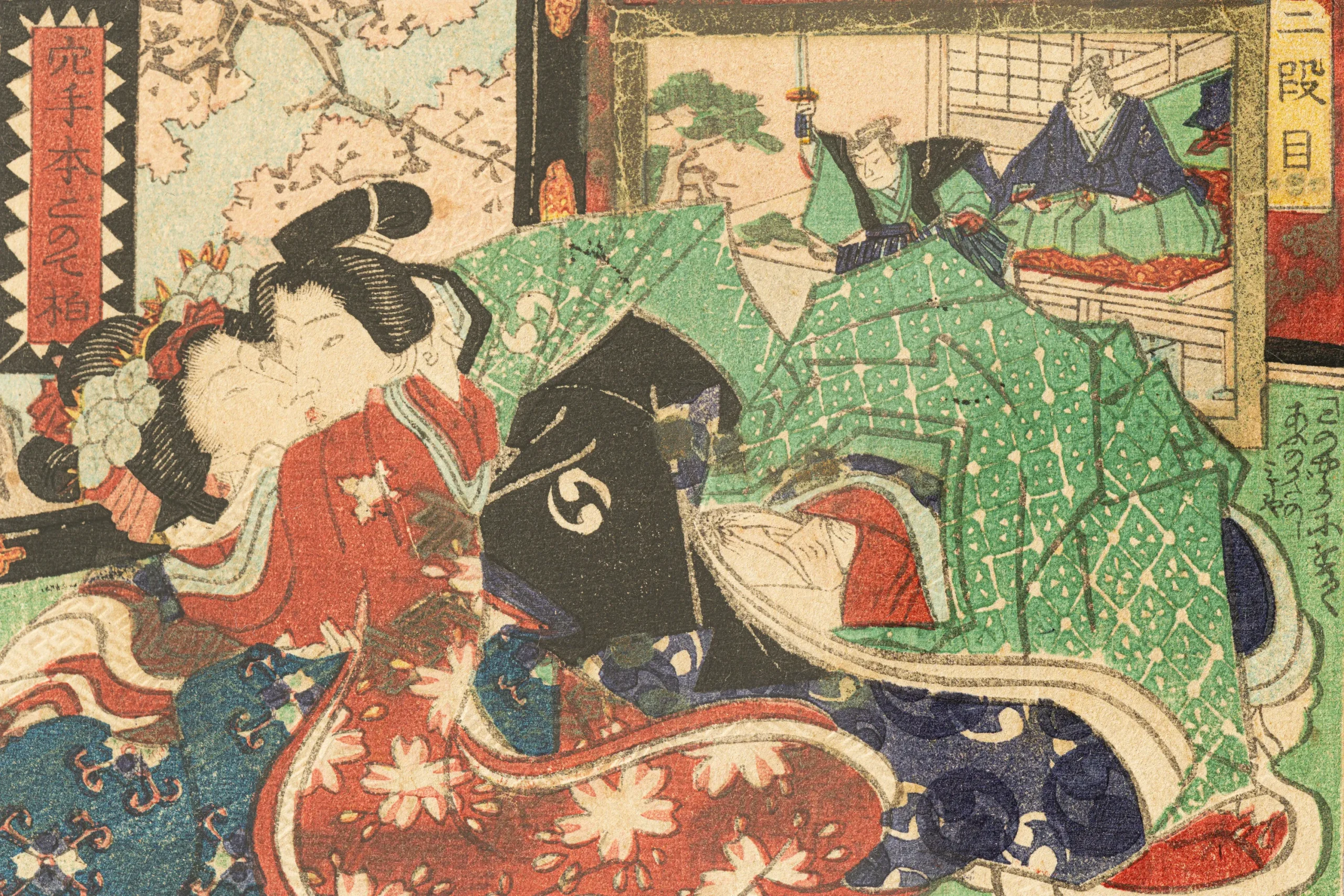
Shunga’s influence on Japanese art and society remains significant, reflecting a time when human desire was openly expressed through creativity and craftsmanship. Rather than being seen as purely erotic, these works form a lasting legacy that connects art, culture, and everyday life.
What makes Shunga truly special is the way it painted intimacy with both beauty and honesty, offering a deeper sense of human connection. Today, it continues to inspire discussions about art, identity, and the cultural meaning of desire beyond simple categorization.
Final thought
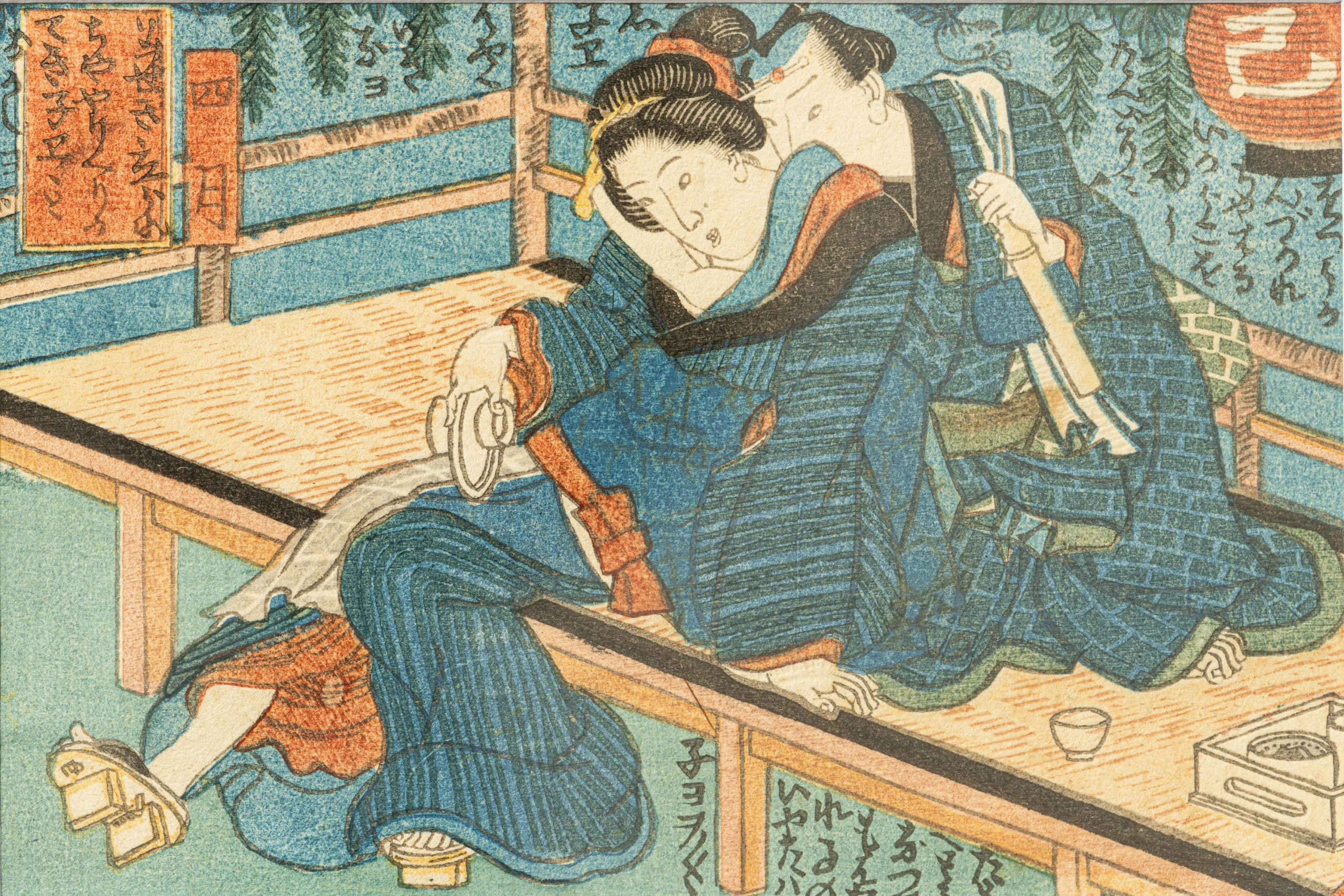
In my opinion, Shunga is far more than historical erotic art. It is a deeply human expression of life, emotion, and connection. I think what makes it unique is how naturally it blends desire with everyday culture, without the sense of shame often seen in modern interpretations.
I feel that by looking at Shunga, we are not just viewing intimate images, but understanding how people in the Edo period perceived relationships, pleasure, and even humor. I was also able to experience this firsthand in Shinjuku Kabukicho, where a Shunga exhibition allowed me to see these works up close in a modern urban setting.
In my opinion, this direct encounter made the experience even more real. It is not just history, but something that can still be felt today, offering a timeless reflection of human nature.
If you would like to experience shunga in Tokyo, securing your ticket in advance ensures access to this limited-time exhibition.
FAQ
Where can you see Shunga in Tokyo?
Shunga can be viewed in selected museums and special exhibitions in Tokyo. While permanent displays are rare, temporary exhibitions are sometimes held in places like Shinjuku and other cultural venues. Some private galleries and events also showcase Shunga as part of Japanese art history.
What does “Shunga” mean in Japanese?
Shunga (春画) literally means “spring pictures” in Japanese. The word “spring” is a euphemism referring to love, sexuality, and human intimacy, commonly used in traditional Japanese culture.
How does Shunga relate to Japanese culture?
Shunga reflects Edo-period Japanese culture, where sexuality was seen as a natural part of life. It was widely enjoyed by samurai, merchants, and common people, and often used for education, entertainment, and artistic expression.
What is the significance of Shunga?
Shunga is significant as both an artistic and cultural form. It combines detailed woodblock techniques with themes of love and human connection, offering insight into historical attitudes toward intimacy and aesthetics in Japan.