Bar Host club Hostess club Miso Shunga Ukiyo-e 东京男公关俱乐部 中国語

Ukiyo-e is a world famous traditional Japanese artstyle, you’ve probably seen it but didn’t know what it was called. A particularly famous example is the striking and vibrantly colored woodblock print of The Great Wave off Kanagawa by Katsushika Hokusai.
At the very heart of this enduring cultural legacy are the ukiyo-e artists. The term ukiyo-e (浮世絵) translates beautifully and melancholically to “pictures of the floating world.” Originally a Buddhist concept denoting the fleeting, sorrowful nature of life, the meaning shifted dramatically during a time of peace and prosperity. It came to celebrate the ephemeral, hedonistic pleasures of urban life—theaters, fashion, and natural beauty.
From the dramatic, crashing waves immortalized by Katsushika Hokusai to the lyrical, atmospheric journeys depicted by Utagawa Hiroshige, these prints have captivated audiences for centuries. But who were the masterful artists behind these iconic works? How did a form of commercial pop culture in Japan evolve to influence the trajectory of global art?
Let’s dive deep into the fascinating world of ukiyo-e. We will explore its intricate creation process, trace its historical evolution, and introduce you to the legendary figures—including the titans of the Utagawa school—who transformed the artstyle into an immortal artistic movement.
- What is Ukiyo-e? The Art of the Floating World
- Origins and History: From the Early Edo Period to Global Acclaim
- The Woodblock Printing Process: A Symphony of Collaboration
- Famous Ukiyo-e Artists You Need to Know
- Evolution of Ukiyo-e Movements and Schools
- Early Period (Harunobu and Nishiki-e)
- The Golden Age of Ukiyo-e
- The Utagawa School: An Artistic Empire
- Themes and Genres of Ukiyo-e Art
- The Legacy of Ukiyo-e in Modern Life
- Influence on Western Art: The Wave of Japonisme
- Contemporary Ukiyo-e and Shin-hanga
- Conclusion: Celebrating the Masters of Ukiyo-e
- Final thought
What is Ukiyo-e? The Art of the Floating World
To truly appreciate the genius of a ukiyo-e artist, one must first understand the cultural and technical ecosystem in which they operated. Ukiyo-e was the mass media, the fashion magazine, and the travel brochure of its day.
/浦上蒼穹堂蔵.webp)
Origins and History: From the Early Edo Period to Global Acclaim
The story of ukiyo-e is inextricably linked to the Edo period (1603–1867). Before this era, Japan had endured centuries of civil war. When the Tokugawa shogunate unified the country and established its capital in Edo (modern-day Tokyo), a remarkable period of unprecedented peace and economic growth began.
This stability gave rise to a powerful new merchant class known as the chōnin (townspeople). Though positioned at the bottom of the strict feudal social hierarchy, the merchants amassed significant wealth. With money to spend and a desire for entertainment, they flocked to the licensed pleasure quarters (like Yoshiwara), bustling kabuki theaters, and sumo wrestling matches.
Ukiyo-e was born in the 17th century to cater specifically to the tastes of these wealthy, pleasure-seeking townspeople. Early works were often simple, monochrome brush paintings or single-color prints. However, as the demand for visually striking representations of their vibrant lifestyle grew, so did the technology. By the 18th and 19th centuries, the medium had evolved into complex, multi-colored masterpieces (nishiki-e, or “brocade prints”), capturing everything from intimate portraits of beautiful women to sweeping landscape vistas.

The Woodblock Printing Process: A Symphony of Collaboration
A common misconception is that a ukiyo-e artist worked entirely alone to produce a print. In reality, creating a woodblock print was a highly collaborative, industrialized process known as the hanmoto (publisher) system. The incredible detail and vibrant colors of these prints were achieved through the synchronized efforts of a skilled quartet:
- The Publisher (Hanmoto): The publisher was the orchestrator and financier of the project. They gauged public trends, commissioned the artists, and bore the financial risk. They were essentially the producers of the Edo art world.
- The Artist (Eshi): The artist—such as Hokusai or Hiroshige—was responsible for the initial design. They would draw the master image on thin, translucent paper (minogami) using black ink.
- The Carver (Horishi): The carver pasted the artist’s drawing face-down onto a block of solid cherry wood. In a display of astonishing precision, they chiseled away the negative space, leaving only the raised lines of the image. This destroyed the original drawing in the process. For full-color prints, the carver had to create a separate wooden block for every single color used in the final design.
- The Printer (Surishi): The printer applied water-based pigments to the carved blocks. Using a circular rubbing pad called a baren, they pressed the handmade mulberry paper (washi) onto the blocks. To ensure the colors aligned perfectly across multiple blocks, they used a genius registration mark system called kentō (a carved notch at the corner of the block).
Because these prints could be mass-produced, they were incredibly affordable—often costing about the same as a bowl of soba noodles. This accessibility meant that ukiyo-e was an artform accessible to the common people of Edo, enabling them to bring masterpieces into their homes.
→Learn more about how ukiyo-e prints were made in our detailed guide.

Famous Ukiyo-e Artists You Need to Know
While thousands of individuals contributed to the thriving print industry during the Edo period, a select few artists elevated the medium from disposable pop culture to timeless fine art. These masters pushed the boundaries of composition, color, and subject matter. Here are the most influential ukiyo-e artists whose names are permanently etched into art history.
Katsushika Hokusai (1760–1849): The Madman of Painting
No conversation about Japanese prints is complete without Katsushika Hokusai. Renowned for his obsessive dedication to his craft (he famously referred to himself as “the old man mad about drawing”), Hokusai fundamentally shifted the focus of ukiyo-e from the pleasure quarters to the natural world.
His crowning achievement is the monumental series Thirty-Six Views of Mount Fuji. It is within this series that we find The Great Wave off Kanagawa, arguably one of the most recognized pieces of Asian art in the world.
- Why he was special: Hokusai possessed a brilliant understanding of geometric composition and dynamic tension. He was also a pioneer in the use of “Berlin blue” (Prussian blue), an imported synthetic pigment that allowed him to create vivid, enduring landscape scenes that didn’t fade like older organic dyes. His work celebrated the overwhelming power of nature juxtaposed against the daily lives of ordinary Japanese people.
Utagawa Hiroshige (1797–1858): The Poet of the Landscape
If Hokusai captured the raw, dramatic power of nature, Utagawa Hiroshige captured its quiet, atmospheric soul. He was the undisputed master of the lyrical landscape. As travel became safer and more popular in the late Edo period, Hiroshige’s prints served as virtual tourism for those who could not make the journeys themselves.
His masterpiece, The Fifty-Three Stations of the Tōkaidō, chronicles the scenic route between Edo and Kyoto.
- Why he was special: Hiroshige had an unmatched ability to capture the mood of fleeting weather and time of day—heavy mist, sudden summer downpours, the quiet chill of snow, and the glow of twilight. His use of bokashi (a specialized woodblock printing technique used to create beautiful color gradations) gave his prints a deeply poetic and emotional quality that later profoundly influenced European Impressionists.
Kitagawa Utamaro (1750–1806): The Master of Beautiful Women
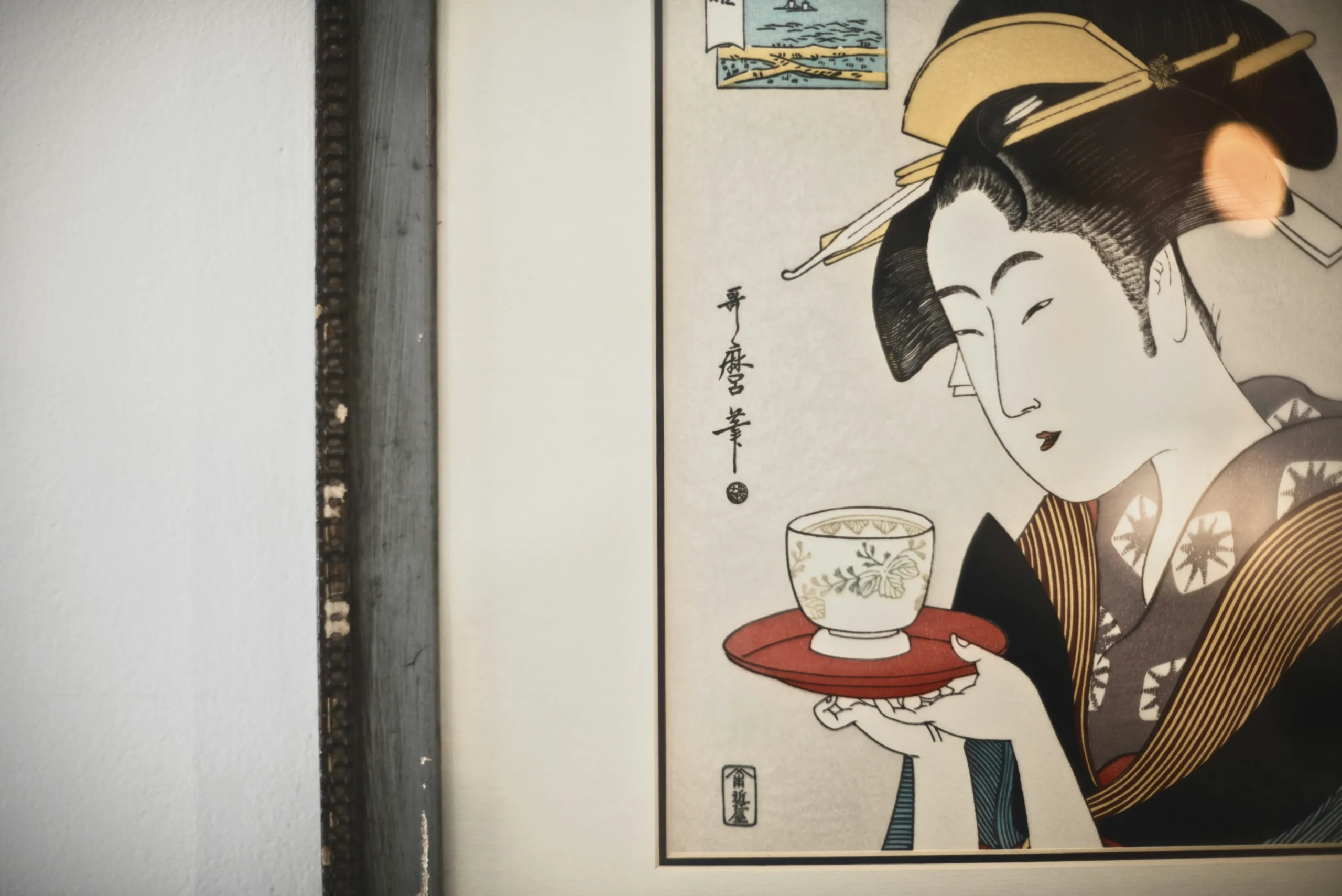
Before landscapes dominated the market, portraits of beautiful women, known as bijin-ga, were the most popular genre. Utamaro was the king of this domain. Rather than painting full-body figures showing off the latest kimono fashions—which was the standard practice before him—Utamaro pioneered the ōkubi-e (large-headed portrait).
- Why he was special: Utamaro was revolutionary because he moved beyond idealized, generic faces. His close-up portraits captured the distinct psychological states, individual personalities, and subtle micro-expressions of his subjects. Whether depicting a high-ranking courtesan, a young teahouse waitress, or a mother nursing her child, Utamaro rendered the sensuality and inner life of Edo women with an elegance unmatched.
Toshusai Sharaku (Active 1794–1795): The Enigmatic Portrayer of the Stage
The story of Sharaku is one of the greatest mysteries in art history. He appeared out of nowhere, produced an explosive burst of over 140 astonishingly vivid prints within a mere 10 months, and then vanished completely. His true identity remains unknown to this day.Sharaku exclusively focused on the theater, creating yakusha-e (actor prints) of famous kabuki stars.
- Why he was special: Unlike other artists who flattered actors by drawing them as handsome, idealized figures, Sharaku drew with brutal, hyper-realistic honesty. He exaggerated their facial features—bulging eyes, prominent noses, and dramatic grimaces—to capture the intense emotion and psychological tension of their on-stage performances. While his unflattering style was controversial and poorly received by his contemporaries, modern critics hail him as a visionary expressionist.
Utagawa Kuniyoshi (1797–1861): The Rebellious Visionary
Working during the twilight of the Edo period, Kuniyoshi was a powerhouse of imagination and a prominent figure in the dominant Utagawa school. While the shogunate began issuing strict censorship laws (the Tenpō Reforms) banning the depiction of courtesans and kabuki actors to curb luxury, Kuniyoshi pivoted and found a loophole: history and myth.
He became famous for his musha-e (warrior prints), depicting legendary heroes, epic battles, and mythical creatures.
- Why he was special: Kuniyoshi’s designs were wildly dynamic, action-packed, and often spanned across three separate sheets of paper (triptychs) to create cinematic, widescreen compositions. He had a penchant for the macabre—drawing giant skeletons, sea monsters, and ghosts—as well as a great sense of humor, often creating satirical prints featuring anthropomorphic cats to subtly mock the government’s strict laws. His bold, almost comic-book-like style is a direct ancestor of modern Japanese manga and anime.
/浦上蒼穹堂蔵.webp)
Evolution of Ukiyo-e Movements and Schools
The vibrant, multi-colored prints we instantly recognize today did not emerge overnight. The history of ukiyo-e is a story of rapid technological innovation and fierce artistic rivalry. As the tastes of the Edo public evolved, so did the techniques and the dominant factions of artists who supplied the demand.

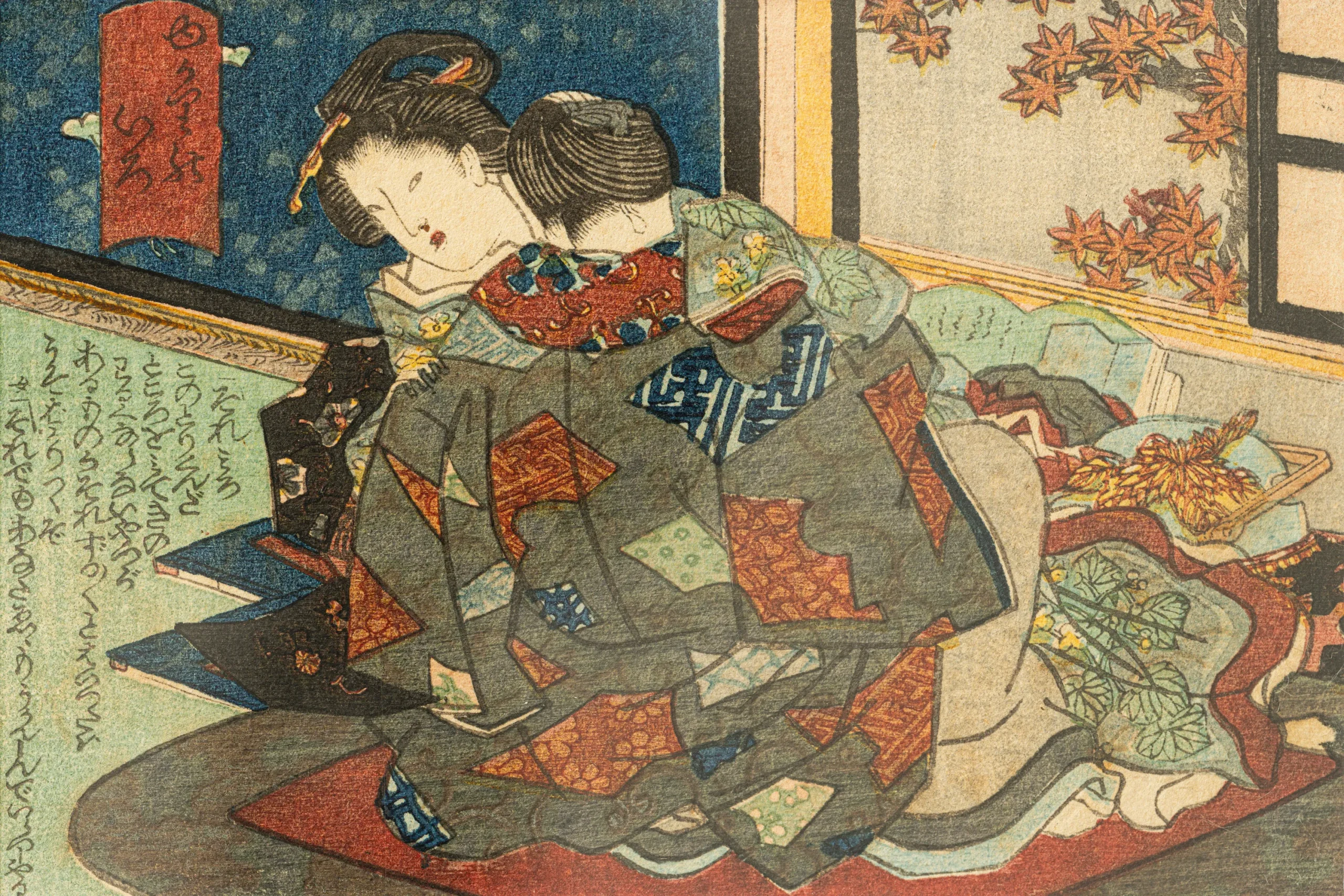
Early Period (Harunobu and Nishiki-e)
In the earliest days of Japanese woodblock printing, images were strictly monochrome (black ink on white paper). If color was desired, it had to be painstakingly applied by hand using a brush. Later, simple two-color prints (usually rose-pink and green) became available, but the process was still limited.
Everything changed in 1765 thanks to the visionary artist Suzuki Harunobu. Harunobu revolutionized the medium by inventing the technique for full-color printing. These magnificent creations were dubbed nishiki-e, which translates to brocade prints.
- What are Brocade Prints? The term “brocade” originally refers to a rich, woven fabric with a raised design, often made with gold or silver threads. Harunobu’s multi-block prints were so incredibly vibrant, thick with high-quality pigments, and luxurious that people compared them to these expensive woven silk brocades.
Harunobu’s nishiki-e allowed for a virtually limitless palette. He used this new technology to create delicate, dreamlike images of young lovers and classical poetry, setting a new technical standard that every subsequent ukiyo-e artist would build upon.
The Golden Age of Ukiyo-e
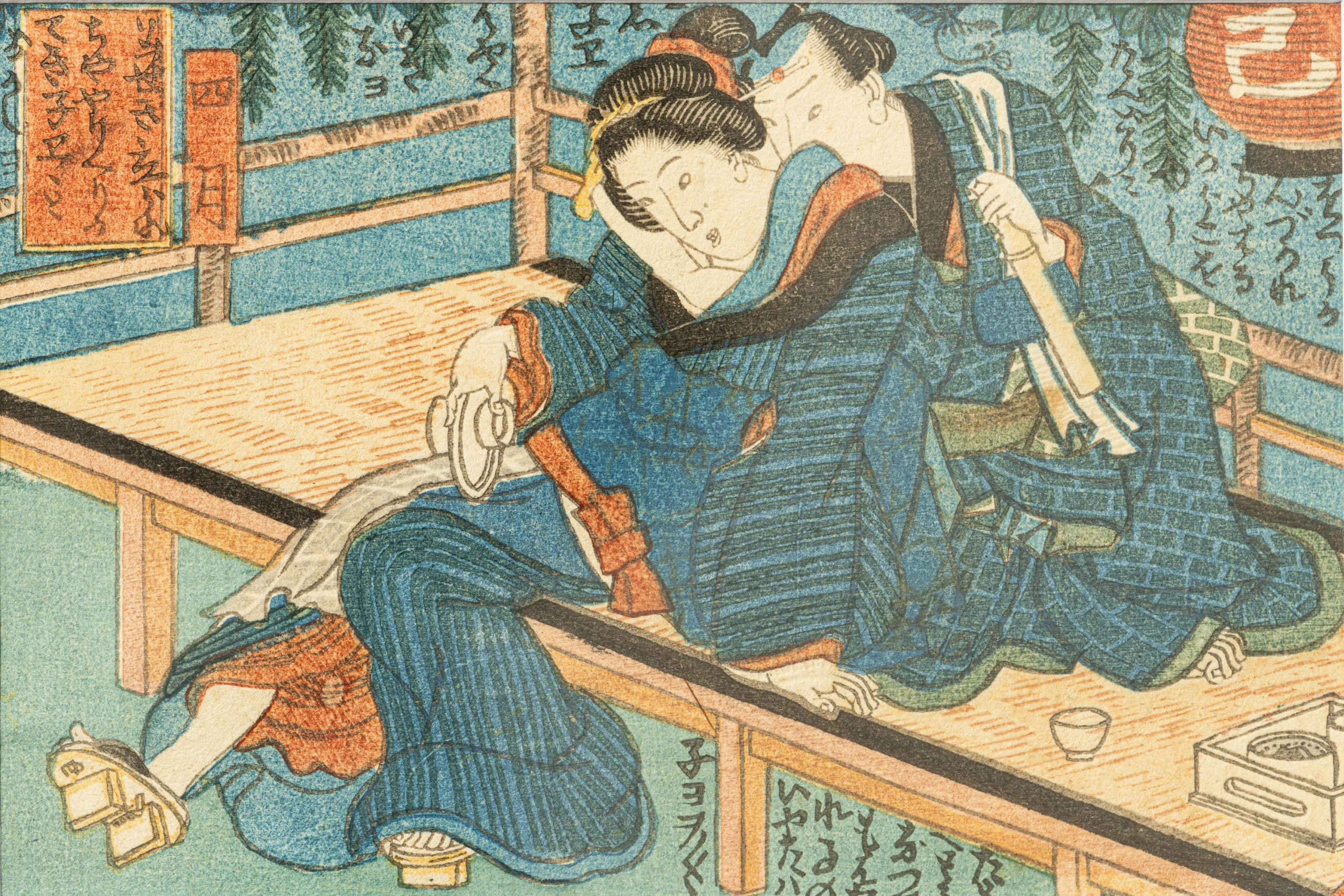
The late 18th century (roughly the 1780s to the early 1800s) is widely regarded as the Golden Age of ukiyo-e. During this period, the sheer craftsmanship of the carvers and printers reached a peak of absolute perfection, allowing artists to express unprecedented levels of detail and psychological depth.
This era was defined by the towering figures we explored earlier: Utamaro perfected the art of female portraiture, while Sharaku captured the explosive energy of the theater. The Golden Age represents a perfect, fleeting balance between idealized beauty and striking realism before government censorship began to alter the trajectory of the art form.
The Utagawa School: An Artistic Empire
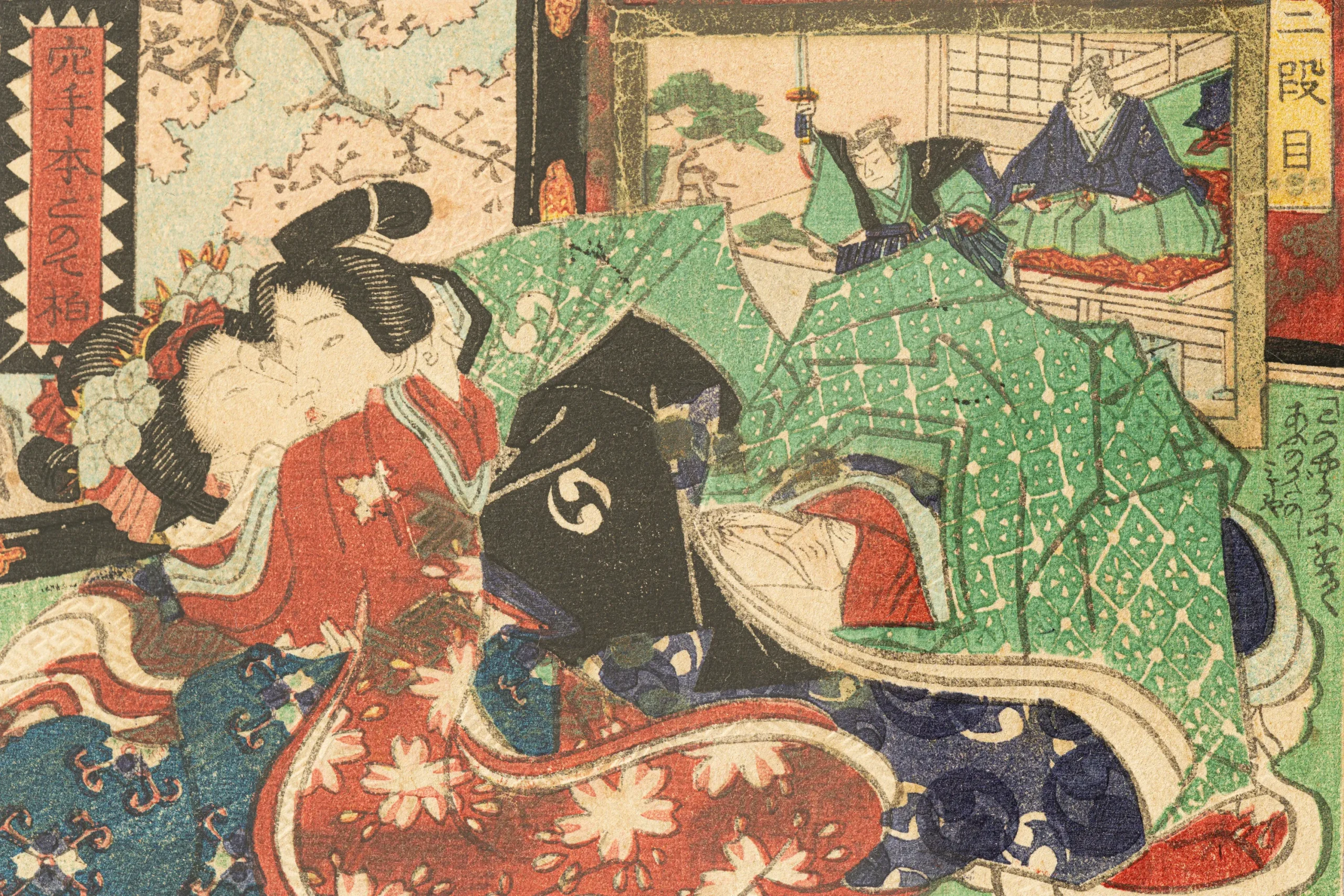
If you look at the signatures on a random sampling of 19th-century Japanese prints, chances are high that you will see the name “Utagawa.” Founded by Utagawa Toyoharu in the late 18th century, the Utagawa school grew to become the largest and most powerful faction in the history of ukiyo-e.
By the mid-19th century, the Utagawa school effectively monopolized the commercial printing industry.
- Why were they so dominant? The Utagawa masters were incredibly adaptable. While other schools specialized in just one subject, Utagawa artists mastered them all. Utagawa Hiroshige conquered the landscape genre, Utagawa Kuniyoshi ruled warrior prints, and Utagawa Kunisada (also known as Toyokuni III) dominated actor prints.
- Later in the 19th century, Tsukioka Yoshitoshi—a brilliant student of Kuniyoshi—would emerge from this lineage to become the last great master of the traditional woodblock print, famous for his emotionally charged and sometimes blood-soaked historical scenes as Japan transitioned into the modern era.
Themes and Genres of Ukiyo-e Art
The subject matter of ukiyo-e is a direct reflection of what the Edo townspeople fantasized about, admired, and spent their money on. To appeal to a broad market, artists categorized their work into several highly popular genres.
Landscapes (Fukei-ga)
For much of the Edo period, commoners were restricted from traveling freely across Japan. Landscape prints (fukei-ga) served as a form of vicarious tourism, allowing people to experience the breathtaking sights of their country from the comfort of their homes.
This genre truly exploded in the 19th century, largely driven by Katsushika Hokusai and Hiroshige. When the government initiated the Tenpō Reforms (strict censorship laws that banned the depiction of “immoral” subjects like actors and courtesans), publishers pivoted heavily to landscapes to stay in business. From the iconic, snow-capped peak of Mount Fuji to the towering, frothing crest of the wave off Kanagawa, landscape prints became the defining global image of Japanese art.
Beautiful Women (Bijin-ga)
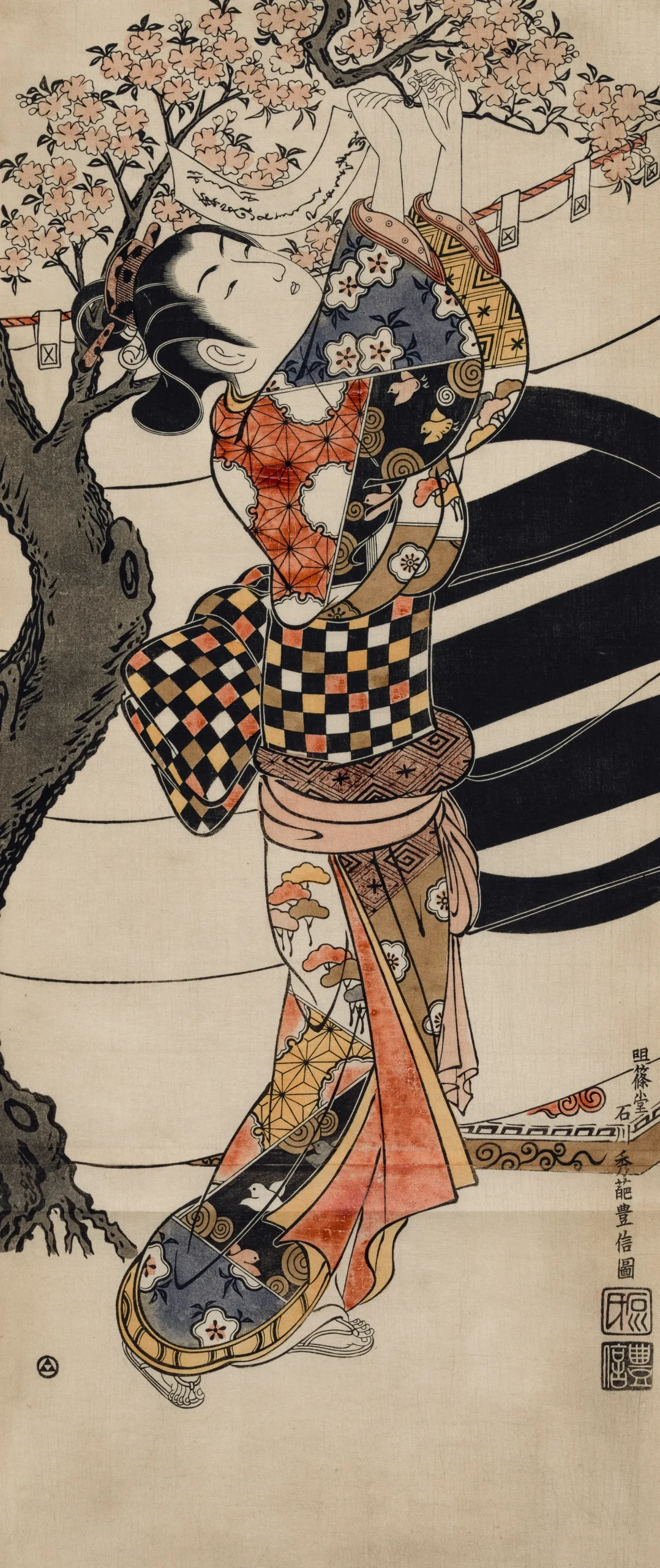
The bijin-ga (pictures of beautiful women) genre functioned much like modern fashion magazines and celebrity Instagram feeds. These prints depicted the trendsetters of the era: high-ranking courtesans of the Yoshiwara pleasure district, popular teahouse waitresses, and geisha.
Women in Edo eagerly bought these prints to see the latest kimono patterns, hairpins, and makeup styles. As pioneered by Utamaro, the best bijin-ga did more than just showcase fashion; they offered an intimate, sometimes melancholic glimpse into the private lives and emotional complexities of these admired women.
Kabuki and Theater (Yakusha-e)
Kabuki theater was the ultimate entertainment for the masses in Edo Japan. It was loud, colorful, dramatic, and wildly popular. Naturally, the stars of the stage were treated like modern-day A-listers.
Yakusha-e (actor prints) were produced in massive quantities to serve as promotional posters for upcoming plays and as collectible memorabilia for hardcore fans. Artists would depict the actors in their most famous roles, capturing the mie—a powerful, cross-eyed pose struck by an actor at the climax of a scene to establish their character’s intense emotion. The Utagawa school, along with the legendary Sharaku, were the undisputed masters of capturing this theatrical magic on paper.
The Legacy of Ukiyo-e in Modern Life
The Edo period eventually came to an end in 1868 with the Meiji Restoration, opening Japan’s borders to the rest of the world. While the influx of Western technology like photography and lithography signaled the decline of traditional ukiyo-e as a mass-media powerhouse, the art form was far from dead. In fact, its greatest global impact was just beginning.
Influence on Western Art: The Wave of Japonisme
When Japanese ports opened, goods like tea and ceramics flooded into Europe. To protect these fragile items during the long voyage, Japanese merchants used crumpled, discarded woodblock prints as cheap packing paper. When French artists unrolled this “trash,” they were utterly mesmerized.
This sparked a massive cultural craze in late 19th-century Europe known as Japonisme. The bold outlines, asymmetrical compositions, flat areas of vibrant color, and lack of traditional Western perspective found in Japanese prints fundamentally changed modern art.
- Vincent van Gogh: Van Gogh was a passionate collector of ukiyo-e and famously painted oil replicas of Utagawa Hiroshige’s prints, such as Plum Park in Kameido. He greatly admired the bright, unshadowed colors of the East.
- Claude Monet: The founder of Impressionism owned hundreds of Japanese prints. He modeled the famous lily pond and bridge at his home in Giverny directly after scenes from landscape prints, and even painted his wife, Camille, dressed in a magnificent kimono surrounded by uchiwa (Japanese fans).
- Edgar Degas and Mary Cassatt: Both artists adopted the intimate, everyday viewpoints and cropped compositions seen in the bijin-ga (beautiful women) prints of Utamaro to revolutionize their own portrayals of women in Paris.
Contemporary Ukiyo-e and Shin-hanga
As Japan modernized into the 20th century, the traditional hanmoto (collaborative publishing) system struggled to survive. However, the spirit of the ukiyo-e artist evolved into new movements:
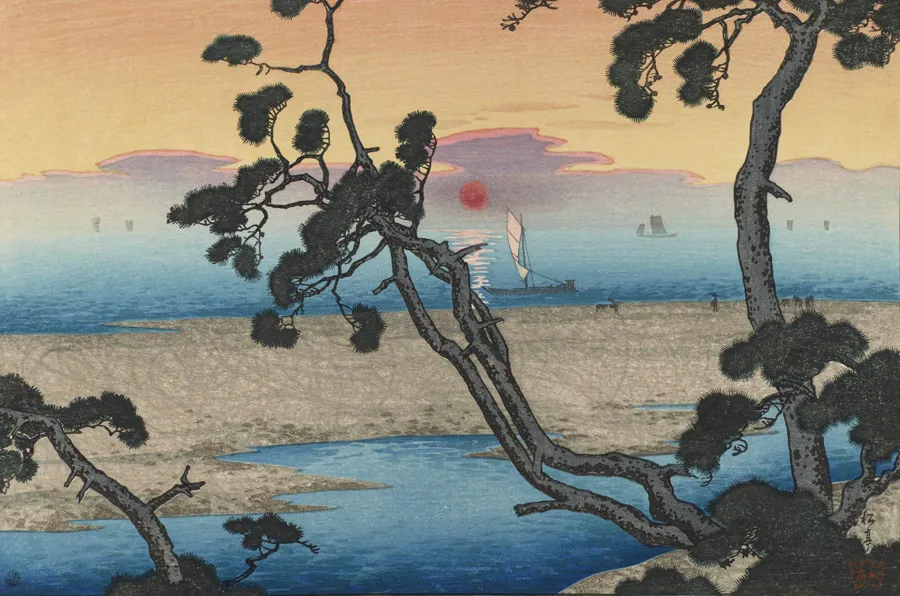
- Shin-hanga (New Prints): In the early 20th century, publisher Watanabe Shozaburo revived the traditional collaborative workshop system. Shin-hanga artists combined Western elements like deep shading, realistic lighting, and linear perspective with classic Japanese subjects—creating breathtaking, highly atmospheric landscapes and portraits that appealed heavily to foreign collectors.
- Sōsaku-hanga (Creative Prints): In contrast to the collaborative system, this movement championed the idea that the artist should be the sole creator—drawing, carving, and printing the woodblock entirely by themselves to ensure pure self-expression.
Today, the DNA of artists like Kuniyoshi and the bloody, dynamic late-Edo masterpieces of Tsukioka Yoshitoshi can be clearly seen in the dramatic framing, exaggerated action, and stylized violence of modern Japanese manga and anime.
Conclusion: Celebrating the Masters of Ukiyo-e
From its humble beginnings as monochrome book illustrations to the creation of the world-famous Great Wave off Kanagawa, ukiyo-e is a testament to the boundless creativity of the Japanese spirit.
These prints were the pop culture of their time, capturing the ephemeral beauty of the floating world—the dramatic poses of kabuki actors by Sharaku, the sensual grace of courtesans by Utamaro, the quiet poetry of snow falling on the Tōkaidō road by Hiroshige, and the eternal majesty of Mount Fuji by Katsushika Hokusai. Today, these artists are rightfully revered not just as skilled craftsmen, but as visionary masters who forever changed the global landscape of art.
How to Experience the Real Thing: If you want to move beyond digital screens and see the exquisite bokashi shading and embossed paper texture of an authentic woodblock print, you have several options:
- Museums: World-class collections can be found at the Tokyo National Museum, the Sumida Hokusai Museum in Tokyo, the Metropolitan Museum of Art in New York, and the British Museum in London.
- Digital Databases: For research and high-resolution viewing from home, the Ukiyo-e.org database is an incredible, free resource that aggregates hundreds of thousands of prints from museums worldwide.
The floating world may have faded into history, but thanks to the genius of the ukiyo-e artist, its vibrant colors will never truly disappear.
If you’re visiting Japan, don’t miss the chance to experience real ukiyo-e and shunga art in Tokyo
Final thought
Experiencing traditional Japanese art isn’t confined to quiet museums or preserved historical districts. Even within the neon-lit energy of Shinjuku’s Kabukicho, one can encounter traditions deeply rooted in Japan’s cultural history. This striking contrast between the ancient and the avant-garde is exactly what makes Tokyo so fascinating.
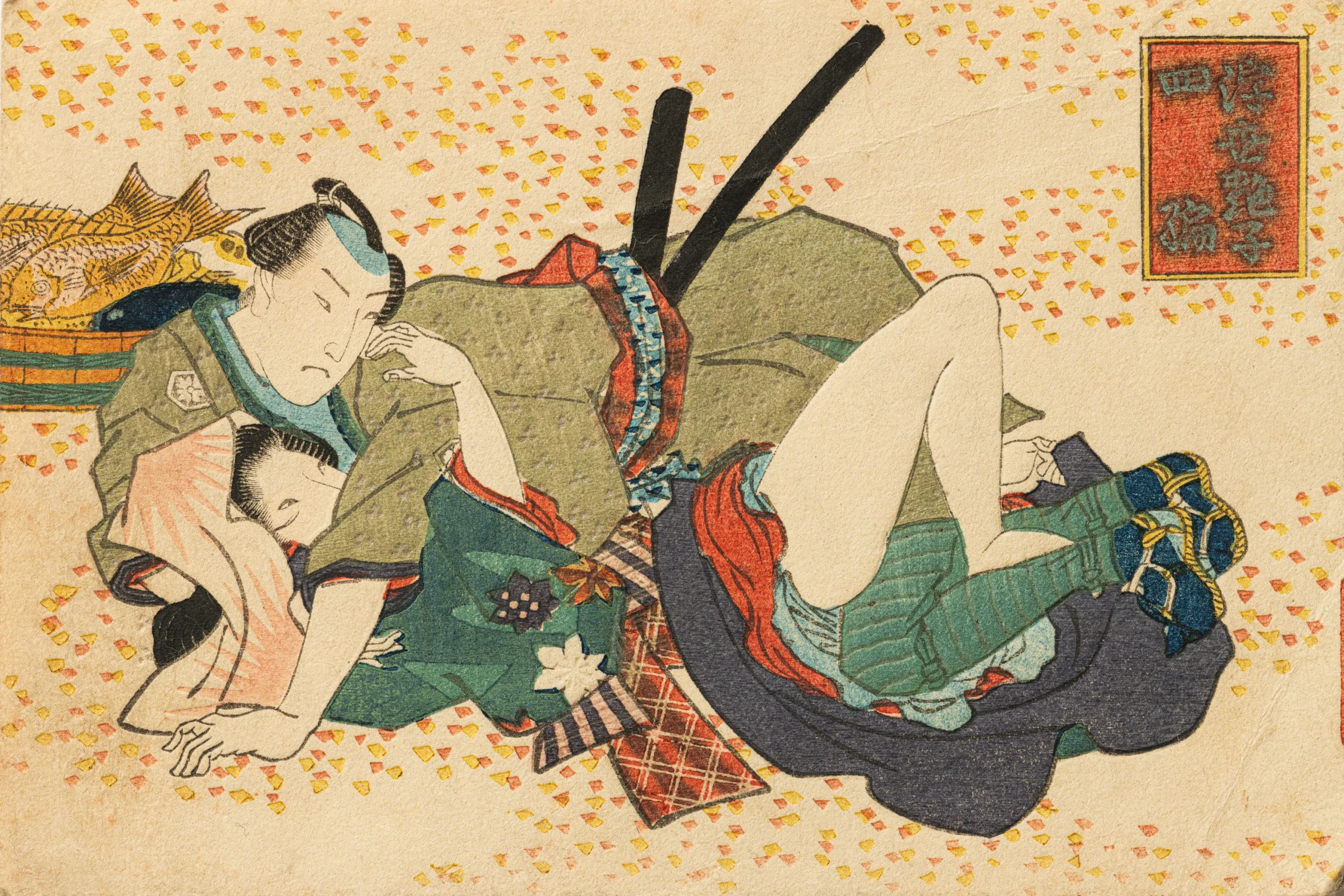
A unique window into this cultural depth is the Shunga exhibition, running in Kabukicho from April 4th to May 31st. The gallery features works by legendary ukiyo-e masters like Katsushika Hokusai and Keisai Eisen. While these artists are global icons of Japanese art, their shunga pieces reveal a raw, unfiltered side of their creativity and expression that is rarely seen in mainstream collections.
Shunga is often misunderstood through a modern lens. While explicitly erotic, these works are vibrant reflections of Edo-period life, capturing the humor, relationships, and human nature of the era. They provide a rare, intimate insight into how people centuries ago viewed connection and everyday pleasure, making the collection historically significant rather than merely provocative.
The preservation of these prints is remarkable. Seeing them in person is a completely different experience than viewing them digitally; the intricate linework, subtle facial expressions, and vivid pigments remain incredibly impactful. The craftsmanship is so delicate that you can almost feel the texture of the era.
There is a poetic significance to hosting this exhibition in Kabukicho. As a hub for modern nightlife and entertainment, the neighborhood provides the perfect backdrop for shunga—a historical art form that once occupied a similar space in the “Floating World” of Old Tokyo. This coexistence highlights Japan’s unique ability to balance its heritage with its future.
This exhibition offers a rare chance to engage with a side of Japanese culture that isn’t always accessible to the public. It allows visitors to move beyond surface-level tourism and explore a more nuanced, authentic artistic heritage. Discovering these unexpected connections between the past and the present in the heart of Shinjuku creates a powerful, lasting impression that defines the true spirit of travel in Japan.