Bar Host club Hostess club Miso Shunga Ukiyo-e 东京男公关俱乐部 中国語
- Shunga Exhibition in Kabukicho, Tokyo
- What is Shunga? Understanding the Genre
- History of Shunga (1603–1867)
- Famous Shunga Artists
- Cultural Context: Kabuki, Noh, and Sumo
- Global Recognition and Museums
- Travel Guide: How to Visit
- FAQ: Shunga Tokyo Guide
Shunga Exhibition in Kabukicho, Tokyo
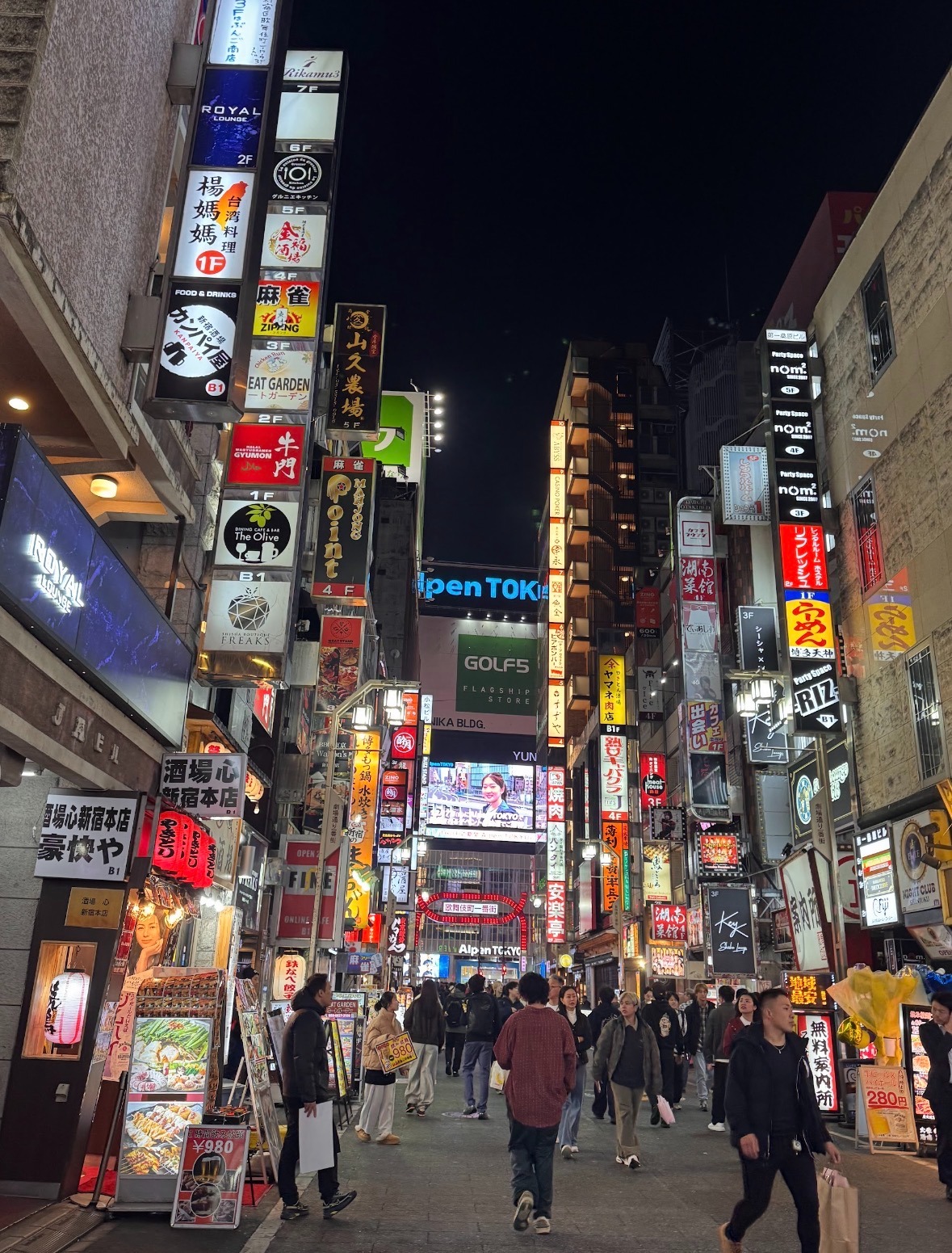
In recent years, Tokyo has seen a renewed interest in shunga, especially in unexpected locations. One of the most unique developments is the emergence of exhibitions in kabukicho, the iconic nightlife district of Shinjuku.
Traditionally, shunga has been displayed in museums or private collections. However, exhibitions organized by the Smappa! Group has redefined the experience by placing historical art within contemporary urban spaces. This creates a striking contrast between Edo-period culture and modern Tokyo nightlife.
Current Exhibition (2026)
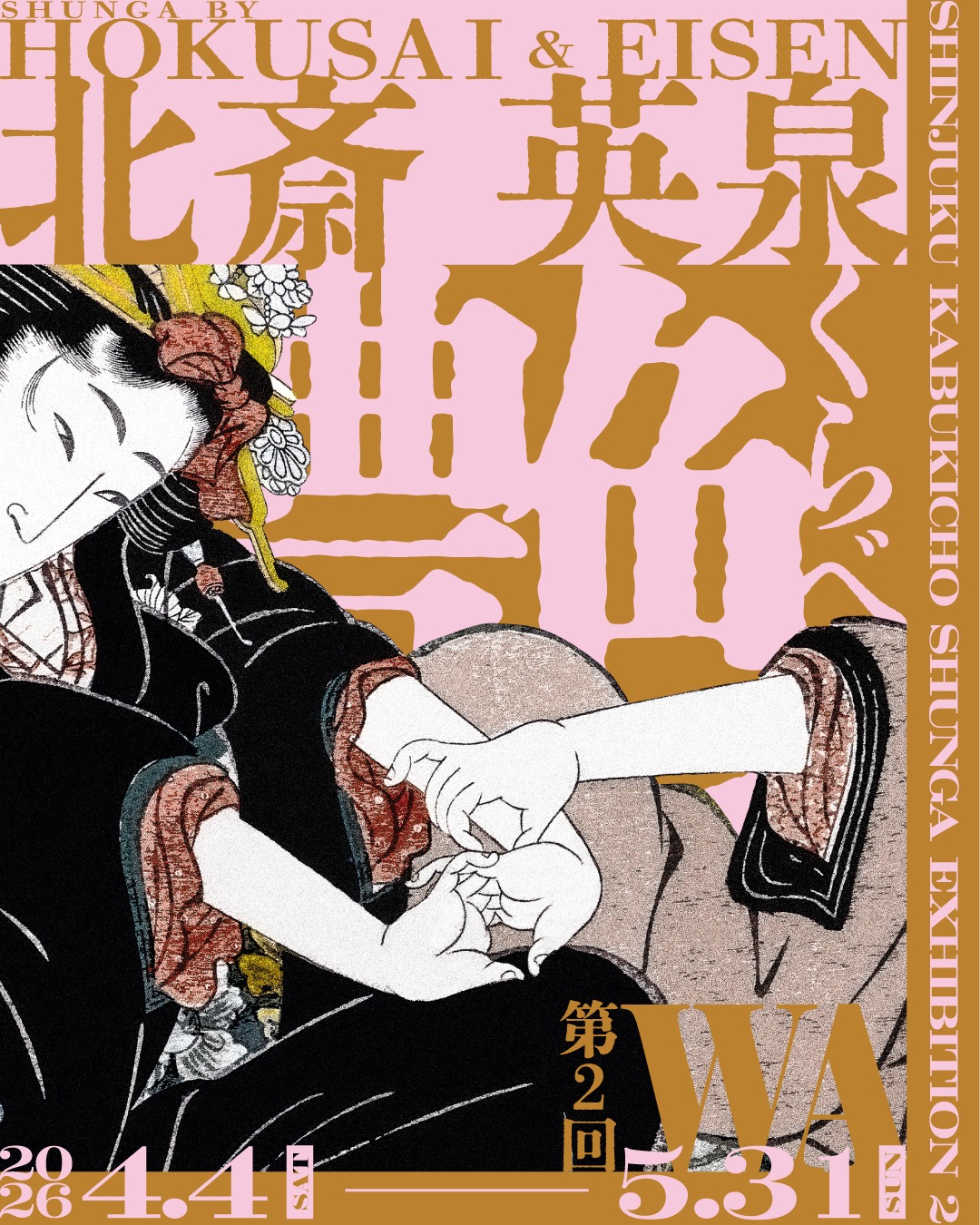
A Contest of Allure: Katsushika Hokusai and Keisai Eisen — Kabukicho in Full Bloom.
Shinjuku Kabukicho Shunga Exhibition: WA
2026.04.04 – 2026.05.31
From May 1, a second phase begins with artwork rotation.
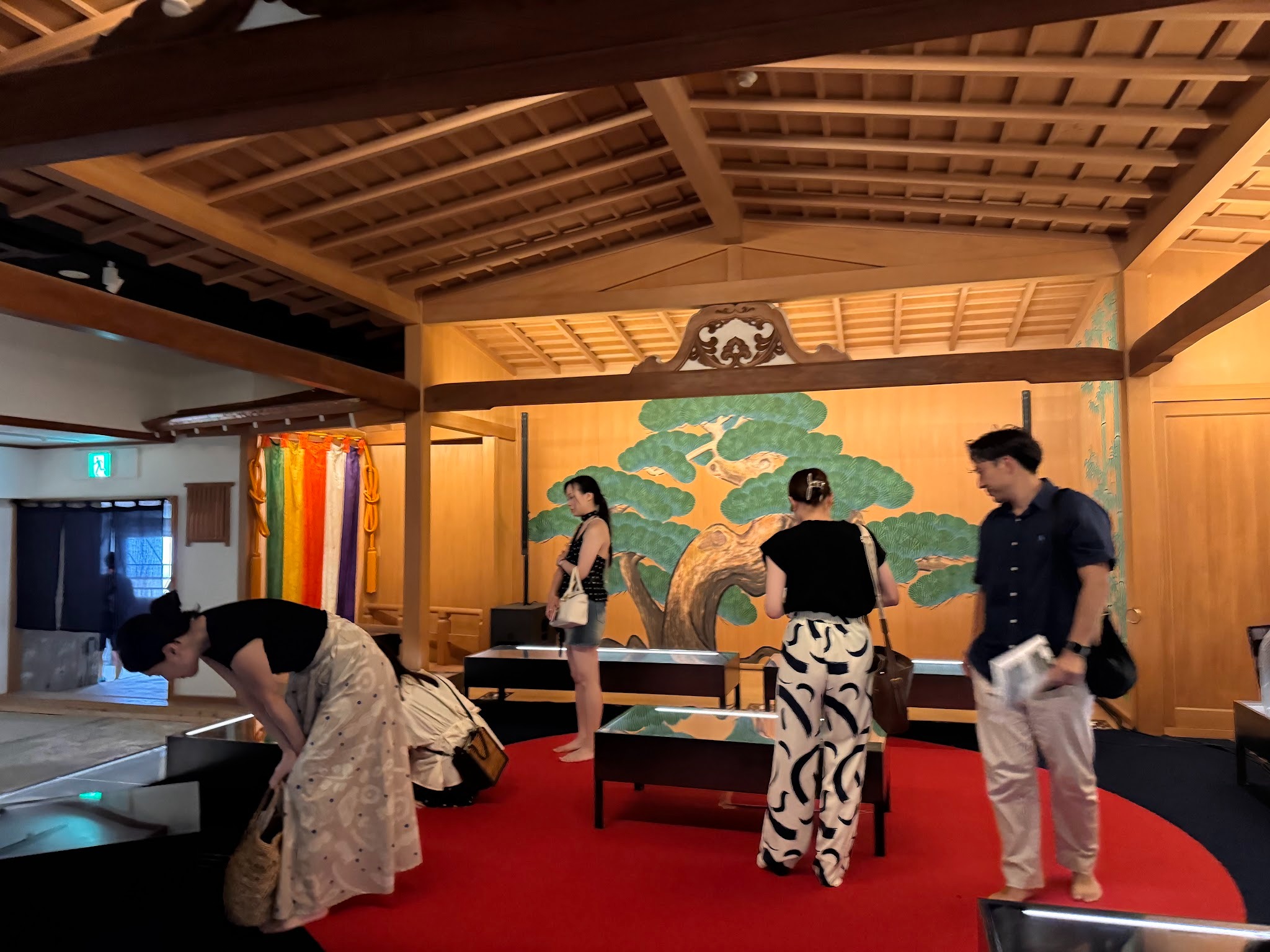
This exhibition compares the styles of Katsushika Hokusai and Keisai Eisen, offering insight into different interpretations of beauty, intimacy, and desire during the Edo period. Visitors can experience detailed woodblock prints up close, gaining a deeper understanding of the artistic techniques and storytelling used at the time.
Tickets and Access
Standard tickets are approximately 2,200 yen, making the exhibition accessible compared to major museum shows in Tokyo.
Advance booking is available:
Walk-in visitors are also welcome, allowing flexibility for travelers exploring Shinjuku without prior reservations.
Official Information
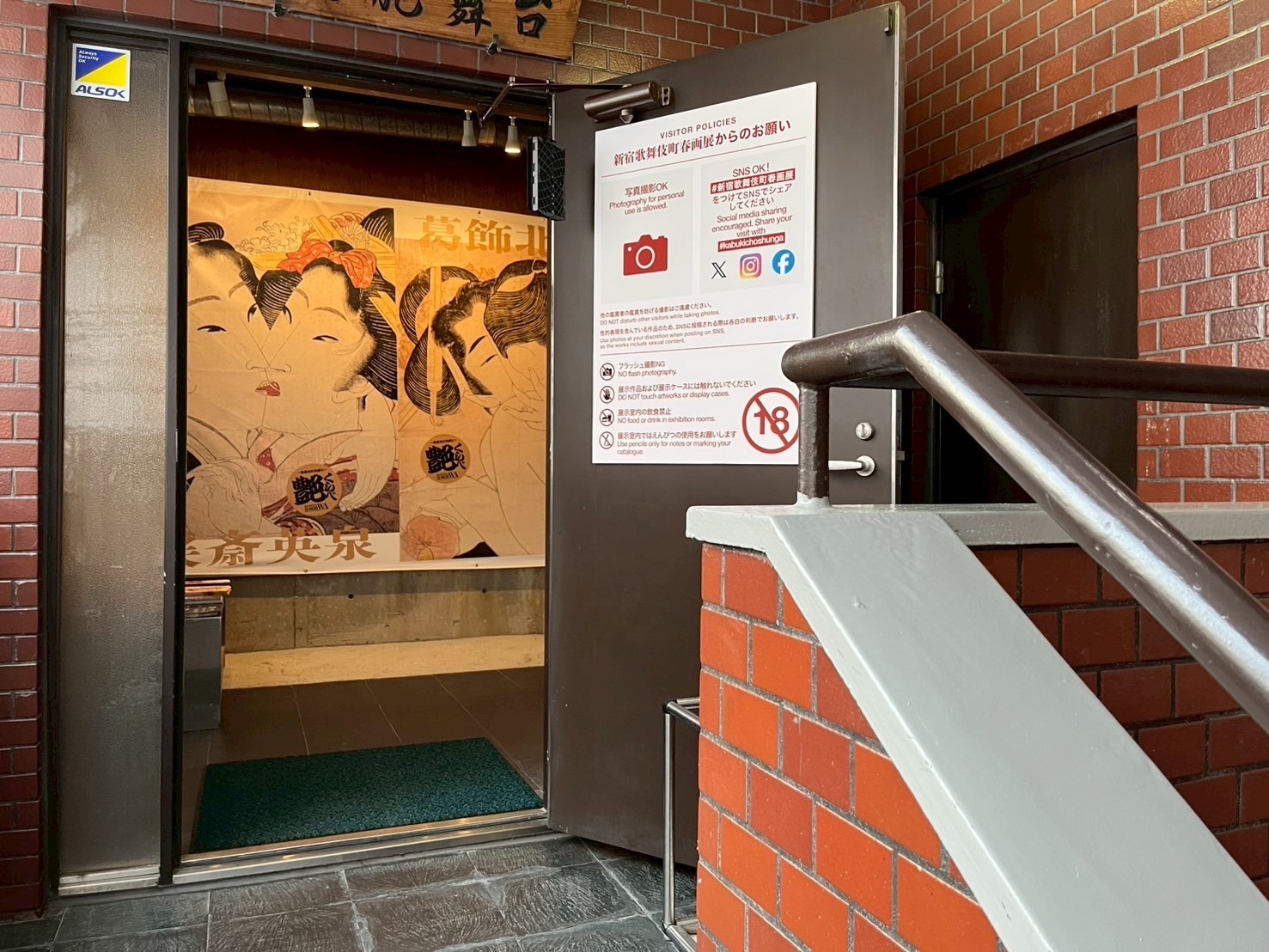
Exhibitions are typically open daily and may continue seasonally throughout 2025 and 2026, last scheduled between July and September.
Official website: https://www.smappa.net/shunga/en/
Instagram: https://www.instagram.com/shunga_kabukicho/
What is Shunga? Understanding the Genre
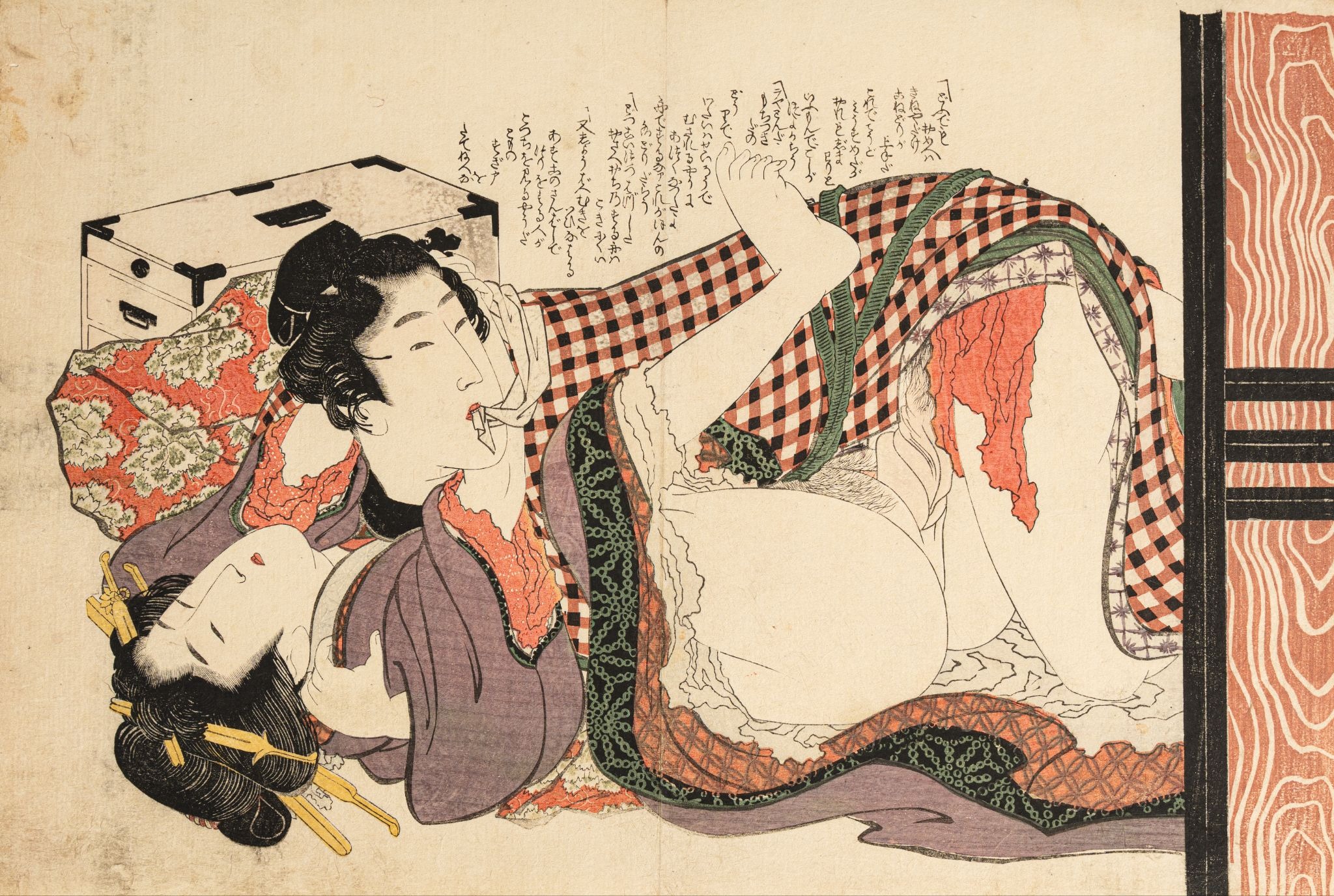
Shunga is a genre of ukiyo e, created as woodblock prints during the Edo period. While often described as erotic art, shunga is better understood as a cultural expression of human relationships and everyday life. These prints depict intimacy with humor, exaggeration, and emotional depth. They reflect the lives of people in Edo city, including merchants, samurai, and townspeople.
Unlike modern assumptions, shunga was widely circulated among the public and was not strictly hidden. It served multiple roles, including entertainment, education, and even as gifts. By representing sexual nature as a natural part of human living, shunga provides insight into how Edo society approached relationships and desire.
Shunga is part of the broader tradition of ukiyo-e woodblock prints. To understand how these prints were created, explore this ukiyo-e prints guide
History of Shunga (1603–1867)
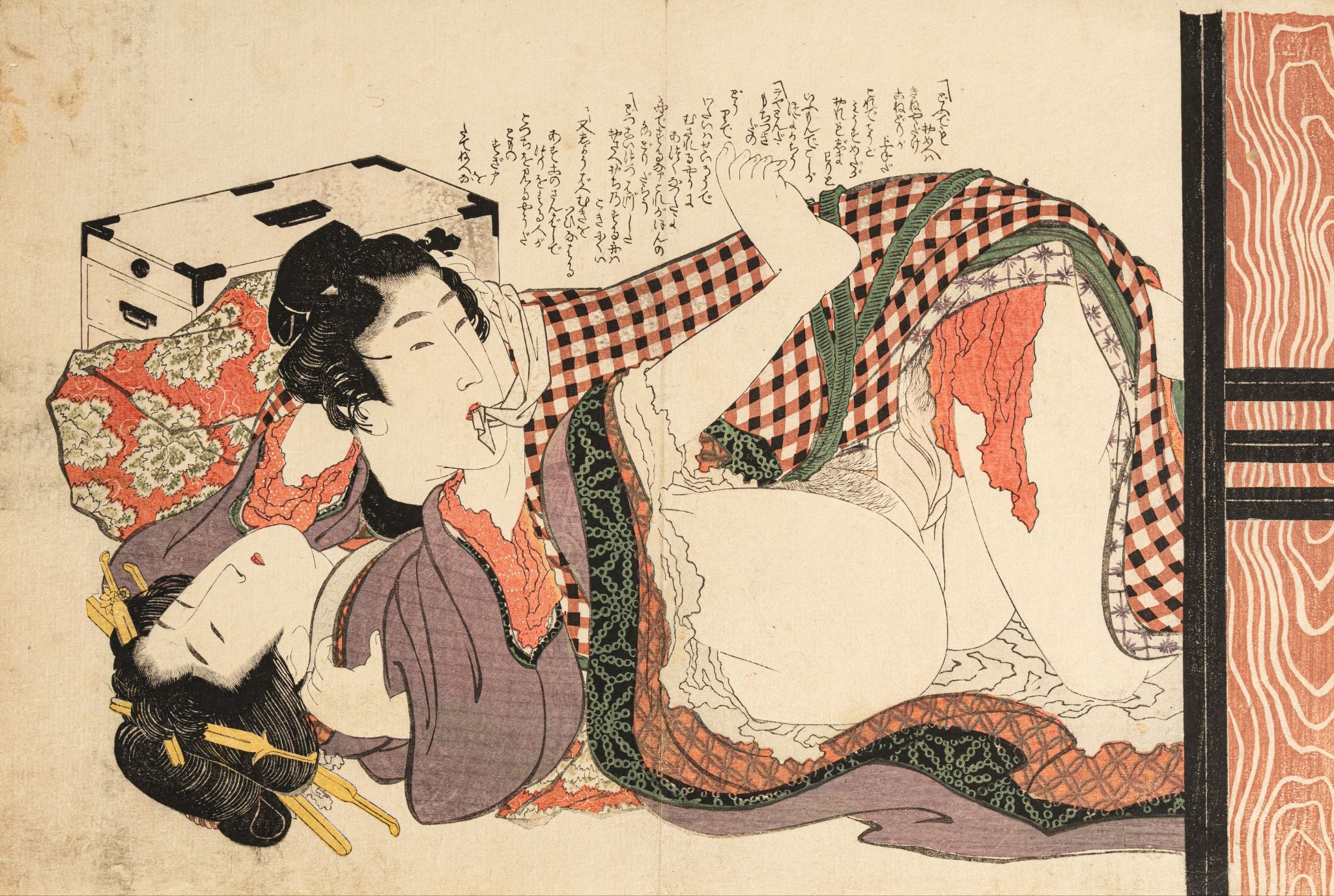
The history of shunga spans from 1603 to 1867, covering the entire Edo period under the Tokugawa shogunate. During these centuries, Japan experienced relative peace, allowing arts and culture to flourish. Shunga developed alongside ukiyo-e, becoming an established and long held tradition.Early influences came from Chinese erotic art, but Japanese artists developed a distinct style that emphasized narrative, composition, and expressive detail.
Although there were periods of regulation, demand remained strong. Shunga continued to be produced and circulated, reflecting its importance in everyday life.Today, it is recognized as part of Japan’s national cultural heritage.
Famous Shunga Artists
Several artists played a key role in shaping shunga.
Hishikawa Moronobu is often considered one of the earliest pioneers of ukiyo-e, establishing the foundation of the genre.
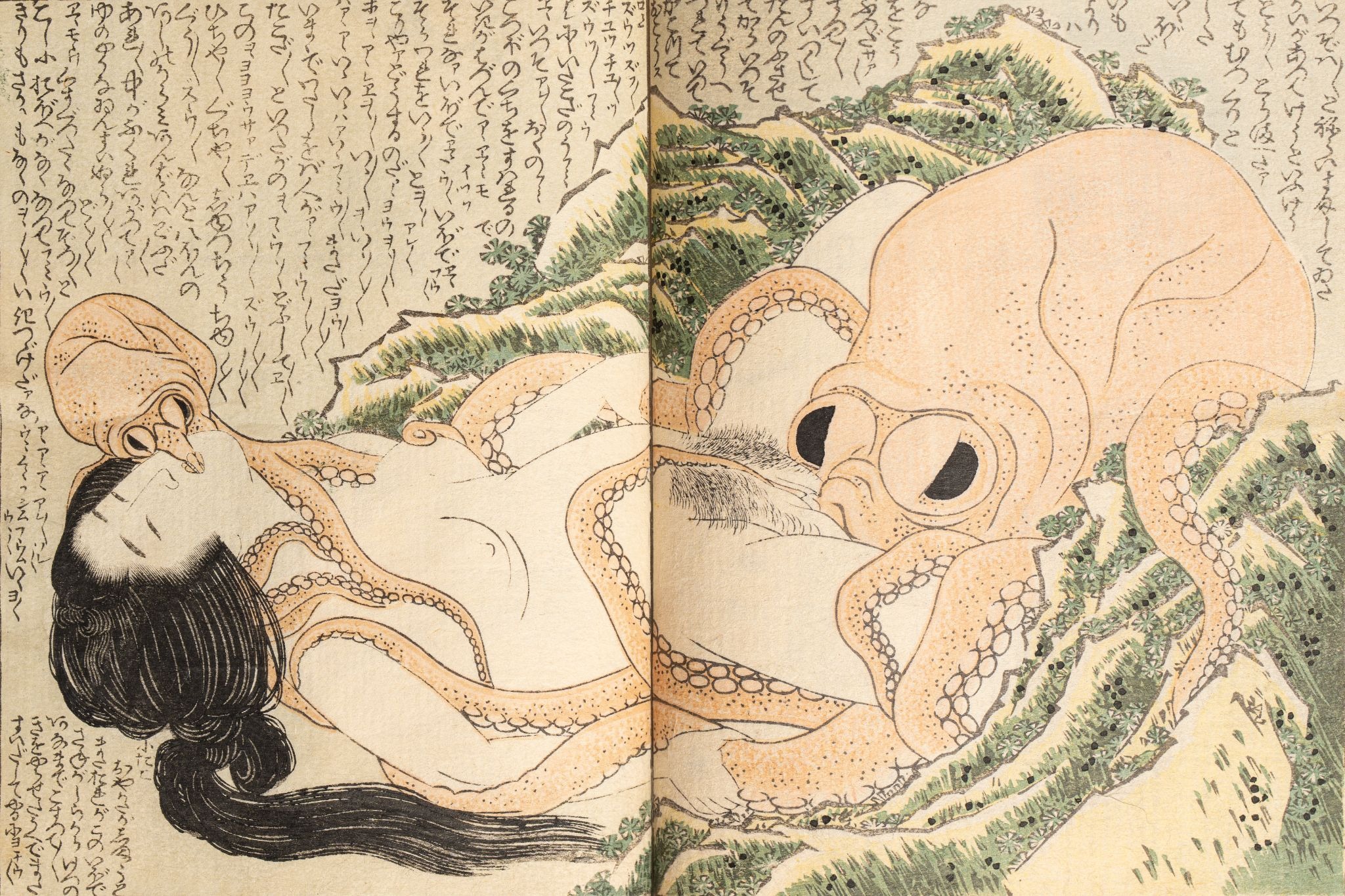
Katsushika Hokusai brought innovation and bold composition, creating dynamic and imaginative works that remain influential today.
Kitagawa Utamaro focused on emotional intimacy, portraying subtle expressions and relationships with remarkable sensitivity.
Modern collectors and curators, including Uragami Mitsuru, continue to preserve and exhibit these works, helping to expand global understanding of shunga. For a deeper look into ukiyo-e artists such as Hokusai and Utamaro, and their iconic woodblock prints, see: https://www.smappa.net/global/ukiyo-e-artists/
Cultural Context: Kabuki, Noh, and Sumo
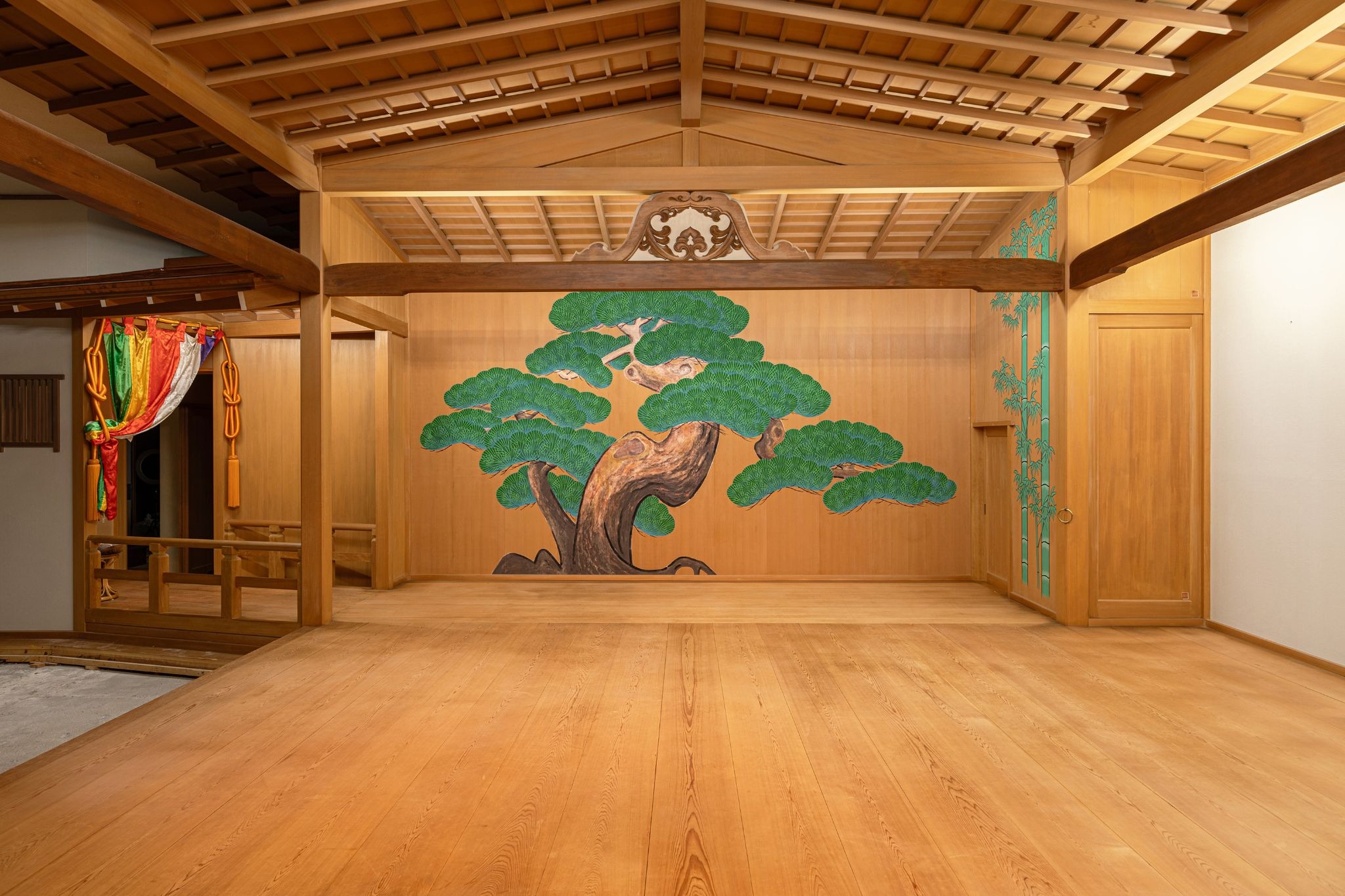
Shunga was part of a broader cultural environment in Edo Japan. It shares themes with kabuki theater, noh stage performances, and even sumo wrestling culture. These connections highlight how art, entertainment, and daily life were deeply intertwined. Many prints depict scenes of music, food, and drink, as well as seasonal events such as cherry blossom viewing. These elements provide a vivid picture of Edo neighborhoods and urban culture.
Global Recognition and Museums
In recent decades, shunga has gained international recognition. Major exhibitions at the British Museum in London helped introduce shunga to global audiences. These exhibitions shifted western perceptions, presenting shunga as an important art form rather than simply erotic material. Today, international museums and collections continue to display these works, contributing to ongoing research and appreciation.
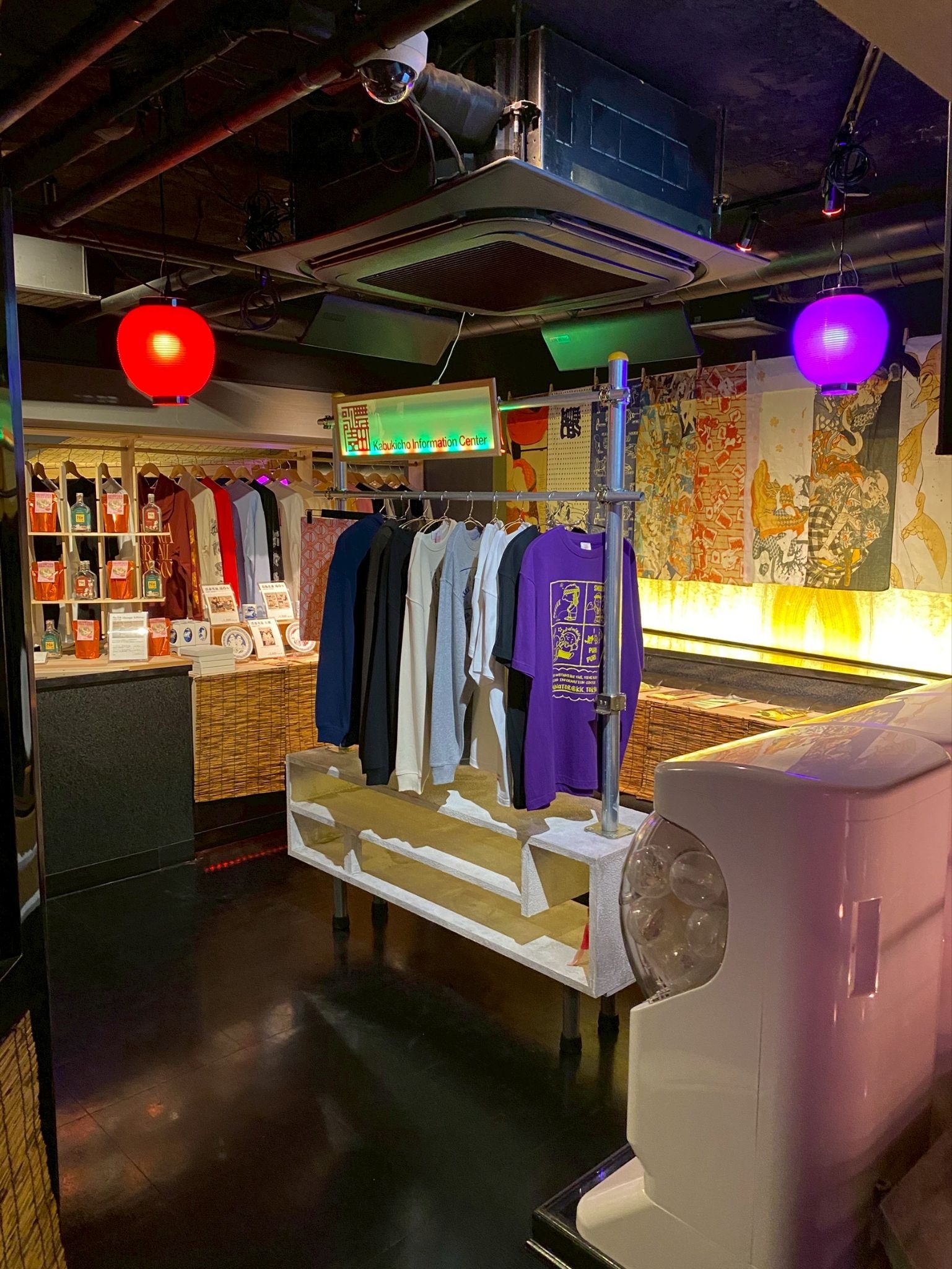
Travel Guide: How to Visit
Staying in hotels in Shinjuku makes visiting the exhibition extremely convenient. Most venues in Kabukicho are within walking distance, allowing visitors to explore both art and nightlife in one area.
For international visitors, english guide services can be arranged by contacting:
Smappa.kabukichoconcierge@gmail.comTo explore the latest updates, visit:
https://www.smappa.net/shunga/en/
FAQ: Shunga Tokyo Guide
What is shunga?
Shunga is a form of Japanese ukiyo-e woodblock prints that depict human relationships and everyday life in the Edo period.
Where can I see shunga in Tokyo?
You can visit exhibitions in Kabukicho Noh Theater, Shinjuku,Tokyo.
How much are tickets?
Tickets are usually around 2,200 yen.
Can I visit without booking?
Yes, a walk-in entry is available.
Is it suitable for foreign visitors?
Yes, English support and guides are available.